2026 Best Kraft Slip Sheets for Efficient Shipping Solutions?
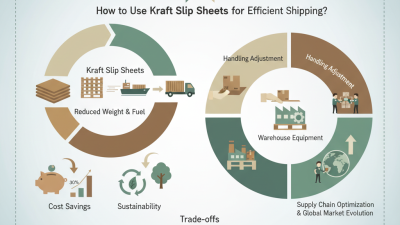
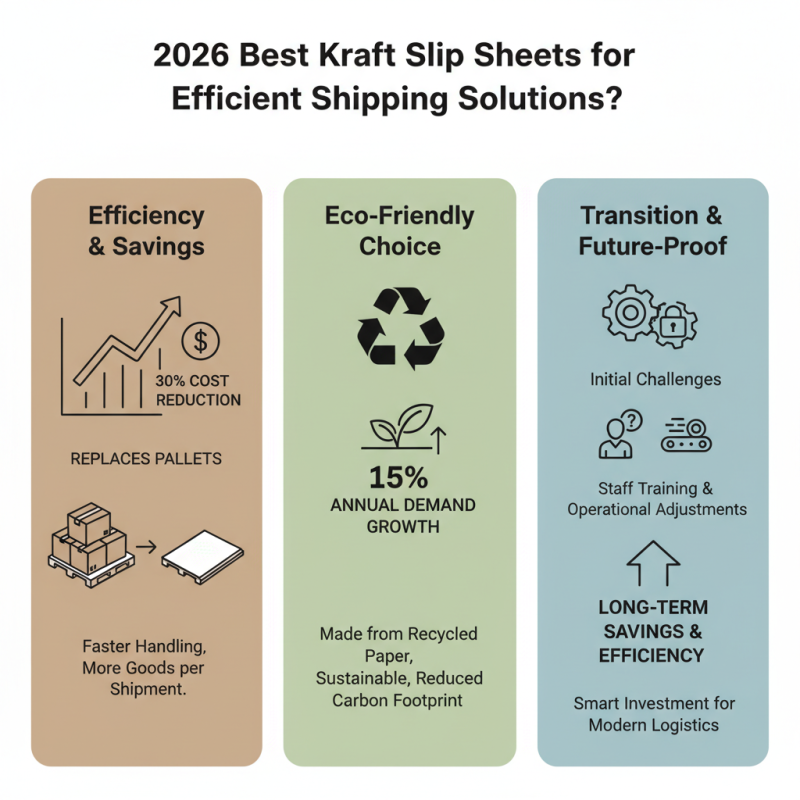
In today's fast-paced shipping industry, efficiency is paramount. Kraft slip sheets are increasingly becoming essential in modern logistics. These lightweight, durable sheets can replace traditional pallets, offering significant cost savings. According to a recent study, companies using Kraft slip sheets reported a 30% reduction in shipping costs. This key advantage drives many firms to adopt them in their supply chains.
Kraft slip sheets are also environmentally friendly. Companies are moving towards sustainable practices, with a growing focus on eco-friendly materials. Kraft slip sheets are often made from recycled paper, aligning with these trends. In fact, a report from the Sustainable Packaging Coalition states that the demand for such materials is projected to rise by 15% annually.
However, transitioning to Kraft slip sheets isn't always straightforward. Some businesses face challenges in training staff and modifying their operations. Despite the initial hurdles, investing in Kraft slip sheets can lead to long-term savings and efficiency gains, making them a smart choice for many organizations. Balancing the transition with traditional methods can be crucial for success in this evolving landscape.
What Are Kraft Slip Sheets and Their Importance in Shipping?
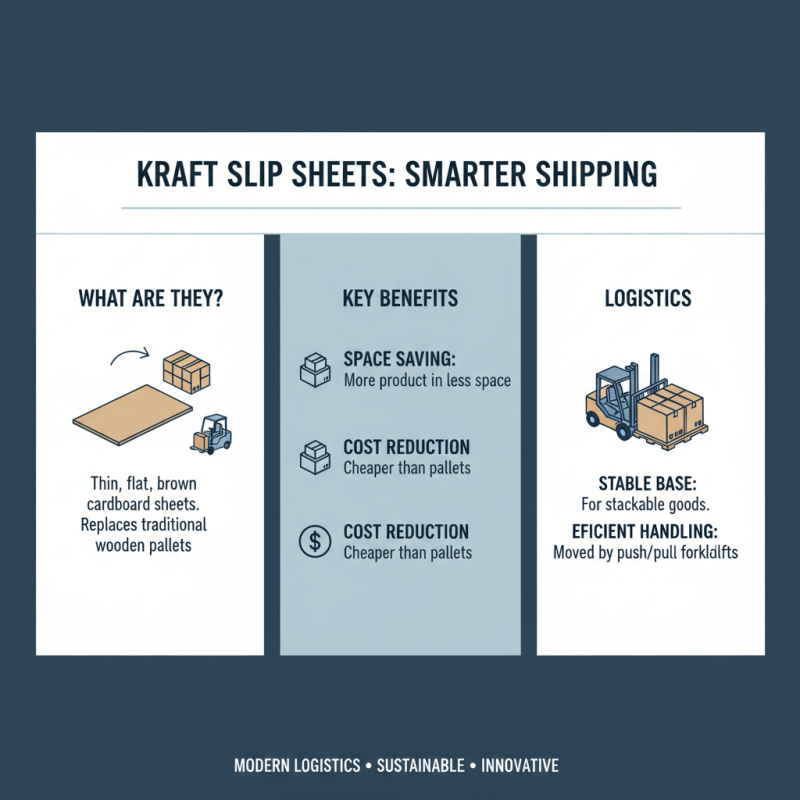
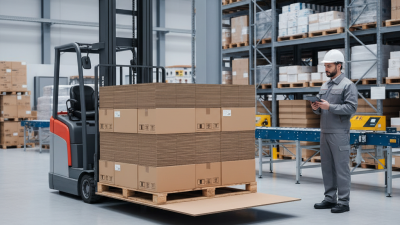
Kraft slip sheets are thin, flat sheets used in shipping. They play a crucial role in modern logistics. These sheets provide a stable base for stackable loads, which can be efficiently moved by forklifts. Their design reduces the need for traditional pallets, saving space and costs.
The use of Kraft slip sheets has gained popularity due to their lightweight nature. This feature helps in reducing shipping expenses, as less weight means lower freight costs. Additionally, they are made from sustainable materials, which appeals to environmentally conscious businesses. However, not all companies have fully embraced them. The transition from pallets to slip sheets can be challenging. Staff must be trained to handle this new system effectively.
While Kraft slip sheets offer many advantages, there are downsides to consider. They may not provide the same level of protection as solid pallets, especially in rough transport conditions. Businesses using slip sheets should evaluate their specific needs and the nature of the goods being shipped. Careful consideration is key to maximizing efficiency and ensuring safe deliveries.
Key Features of the Best Kraft Slip Sheets for 2026
When selecting Kraft slip sheets for shipping in 2026, several key features stand out. Durability is essential. A well-designed slip sheet can handle heavy loads without tearing. The material should resist moisture too. It ensures the sheets maintain their integrity during transit. Companies should analyze the weight capacity of the sheets. Knowing the right limits prevents accidents during shipping.
Another important feature is sustainability. Eco-friendly materials are gaining popularity. Many businesses prefer biodegradable options. This choice reduces environmental impact and appeals to eco-conscious customers. Additionally, the surface texture of the slip sheets matters. A non-slip finish helps secure loads during movement.
Consideration of size options is also crucial. Slip sheets should fit standard pallet sizes for compatibility. However, customization can be beneficial for unique applications. It’s worth noting that not all sheets are created equal. Some may not perform well under specific conditions. Thus, it’s vital to assess user reviews and conduct tests before making a decision. Each user’s experience can provide valuable insights.
Comparative Analysis: Kraft Slip Sheets vs Traditional Pallets
Kraft slip sheets offer unique advantages over traditional pallets in shipping. They are lighter and more compact, leading to potential savings in transportation costs. With less weight, businesses can ship more products per load, which improves efficiency. Slip sheets also allow for better use of space in shipping containers. This can reduce the number of trips needed and lower carbon emissions.
However, not all applications are suited for slip sheets. Some industries still rely heavily on traditional pallets for heavy or bulky items. Slip sheets require compatible forklifts and handling equipment, creating a barrier for some businesses. Additionally, they may not provide the same stability as pallets, leading to concerns during transport.
Understanding the balance between cost-effectiveness and functionality is key. While Kraft slip sheets present an innovative solution, some shippers may struggle to adapt. Evaluating specific shipping needs becomes vital. A nuanced approach considers both the benefits and the limitations of each option. This detailed examination is necessary for optimizing shipping processes.
2026 Best Kraft Slip Sheets for Efficient Shipping Solutions
| Feature |
Kraft Slip Sheets |
Traditional Pallets |
| Weight |
2.5 - 5 lbs |
30 - 50 lbs |
| Cost |
$0.30 - $0.50 each |
$5.00 - $15.00 each |
| Stacking Capability |
High |
Moderate |
| Storage Space Required |
Minimal |
High |
| Eco-friendliness |
Highly Recyclable |
Less Eco-friendly |
| Usage Durability |
Single-use |
Reusable |
Industry Data: Cost Savings from Using Kraft Slip Sheets in Shipping
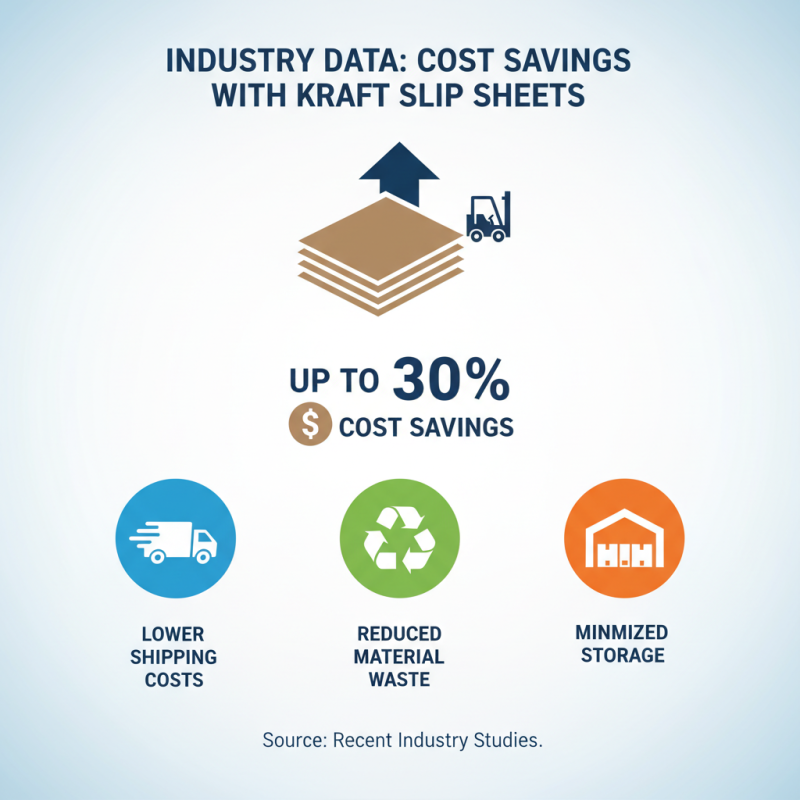
Kraft slip sheets are gaining traction as a preferred shipping solution in various industries. Recent studies indicate that companies using Kraft slip sheets have reported cost savings of up to 30% compared to traditional pallets. These savings stem from lower shipping costs, reduced material waste, and minimized storage requirements.
Moreover, Kraft slip sheets are lighter than pallets, which leads to additional shipping efficiencies. On average, businesses can save approximately 50% in transportation costs just by switching from wooden pallets to slip sheets. This reduction in weight allows for more efficient load management and helps companies comply with sustainability goals.
**Tip:** Consider optimizing your shipping processes by evaluating the current packaging methods. A shift to Kraft slip sheets can provide an immediate financial benefit. However, ensure your workforce is trained on handling and loading these sheets to avoid potential mishaps.
Adopting Kraft slip sheets may not be a one-size-fits-all solution. Some companies face difficulties in transitioning from pallets. It’s essential to assess your specific logistics and operational needs before making the change. Consider running a pilot program to gauge efficiency and identify any challenges you might encounter.
Future Trends in Kraft Slip Sheet Technology and Sustainability
Kraft slip sheets are gaining attention for their role in efficient shipping. These paper-based alternatives to pallets offer a lightweight option. They reduce shipping costs and space requirements. Moreover, they are recyclable, contributing to sustainability in logistics.
Future trends indicate an increasing focus on eco-friendly materials and manufacturing methods. Biodegradable coatings or treatments are being explored. These innovations aim to enhance durability while adhering to green standards. Companies are investing in research to optimize their production processes. The goal is to minimize waste and improve the life cycle of slip sheets.
While Kraft slip sheets provide benefits, challenges remain. Not all businesses have adopted this technology yet. There are concerns about load stability during transport. Some industries may still prefer traditional pallets for their reliability. Continued education on the advantages of Kraft slip sheets is necessary to foster wider acceptance. Adopting such alternatives can drive a significant shift in how goods are transported.
2026 Kraft Slip Sheets Market Trends
This chart illustrates the importance of various factors influencing the development of Kraft slip sheets in 2026. Sustainability leads with a high importance rating, followed by cost efficiency and load capacity, indicating shifts towards eco-friendly and efficient shipping solutions.