How to Choose the Best Safety Cargo Net for Your Needs?
Choosing the right Safety Cargo Net is essential for secure transportation and protection of your cargo. Many options are available, but not all nets meet high standards. Selecting the best Safety Cargo Net requires understanding your specific needs, including the load size and the environment in which you'll use it.
Safety Cargo Nets come in various materials and designs. Some are heavy-duty for rugged use, while others are lightweight for easy handling. Each type serves a unique purpose. Knowing your circumstances helps narrow down choices. Quality nets are often made with durable materials that resist wear and tear while ensuring safety.
Don't overlook the importance of proper sizing. An ill-fitting net may lead to cargo damage. Ensure that your chosen net covers your load adequately. Invest time to evaluate your options and seek expert advice if necessary. A well-chosen Safety Cargo Net will provide peace of mind and safeguard your transport.

Understanding the Different Types of Safety Cargo Nets Available
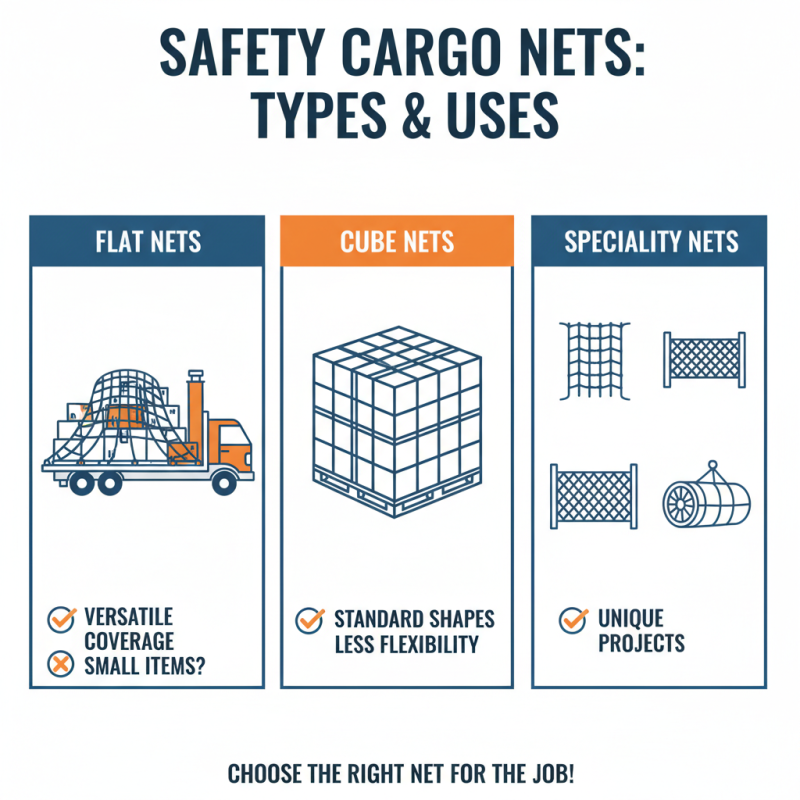
When choosing a safety cargo net, understanding the various types available is crucial. Different projects require different specifications. The most common types are flat nets, cube nets, and specialty nets. Flat nets provide a versatile solution for securing loads of varying shapes. They can easily cover large areas but may not effectively contain smaller items. Cube nets, on the other hand, are designed for specific cargo shapes. They are beneficial when transporting standard boxes or pallets but may lack flexibility.
Specialty nets cater to unique requirements. For instance, some are designed for automotive usage, while others may withstand extreme weather conditions. Each type has its pros and cons. Many users overlook the weight capacity of a net. A net that cannot support your load may lead to catastrophic failures. When assessing your options, consider not only the material but also the net’s mesh design. Tighter mesh may offer better security but may not allow for proper airflow, potentially damaging some cargo.
Reflecting on personal needs is essential. Think about what you will transport most often. This reflection can lead to better choices. Often, the budget impacts decisions, but higher-quality nets offer greater reliability. Cheaper nets might seem appealing but could pose safety risks. Prioritize safety over cost when selecting a cargo net for peace of mind during transportation.
Key Factors to Consider When Choosing a Cargo Net for Safety
When selecting a safety cargo net, several key factors must be prioritized. The net's material is crucial. High-quality materials like polyethylene and nylon provide durability and resistance against wear. According to the American National Standards Institute, cargo nets made from these materials have a higher safety rating.
Load capacity is another vital consideration. A typical cargo net can handle loads ranging from 1,000 to 5,000 pounds. Always check the weight limit and ensure it aligns with your needs. Inadequate load capacity can lead to accidents, resulting in injury or damage. Accidents due to overloaded nets occur frequently, emphasizing this aspect's importance.
Configuration matters as well. Different net sizes and mesh patterns cater to various loads. A properly fitted net prevents slippage and enhances safety during transport. Reports show that 30% of cargo incidents could be减少ed by using appropriately sized nets. Overconfidence in a net's capacity or fit can lead to severe consequences. Make sure to choose wisely.
Safety Cargo Net Selection Factors
Material and Durability: Evaluating Cargo Net Strength and Lifespan
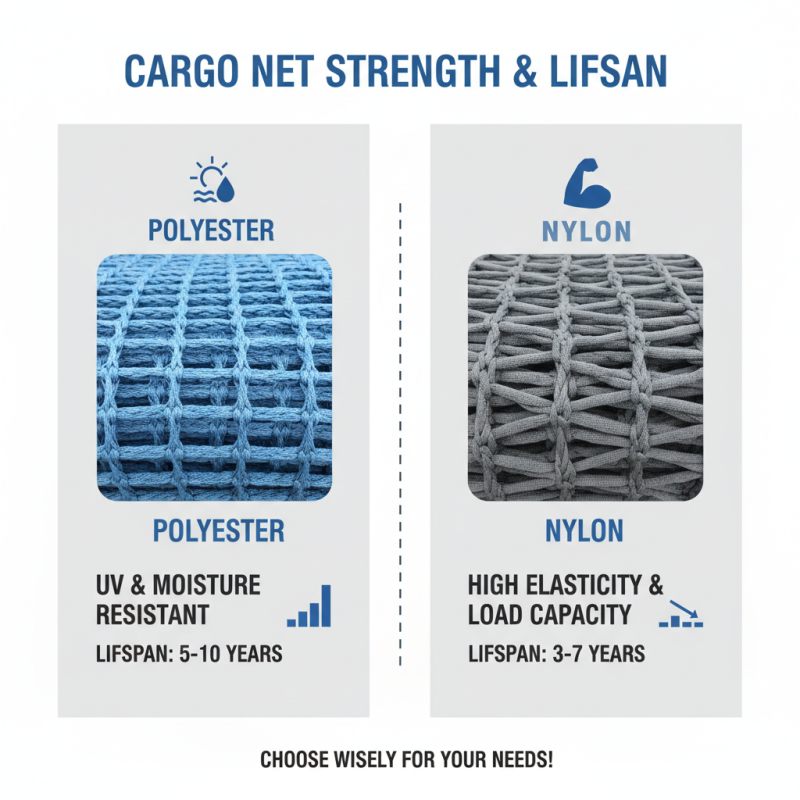
When choosing a safety cargo net, material and durability are crucial factors. The strength of the net often depends on the fabric used. Polyester is popular for its resistance to UV rays and moisture. It can last between 5 to 10 years under normal conditions. In contrast, nylon offers higher elasticity and better load capacity, but may degrade faster when exposed to sunlight and extreme temperatures.
According to industry reports, a cargo net made of high-strength materials can withstand loads of up to 4,000 pounds. However, not all nets are created equal. Many cheaper options may lack the necessary tensile strength or may fray over time, leading to potential safety hazards. The lifespan of a cargo net is not just about material; proper maintenance plays a vital role. Regular inspections for wear and tear can prevent accidents.
Choosing a cargo net also involves considering how you will use it. If you primarily transport sharp or heavy objects, a thicker net may be required. Some users might opt for lighter nets for smaller, less demanding loads but may not realize the risks. Careful evaluation of your specific needs, along with understanding the strengths and weaknesses of various materials, is essential for maximizing safety and effectiveness.
Size and Compatibility: Ensuring the Right Fit for Your Cargo Needs
Choosing the right safety cargo net is essential for securing your load. The size and compatibility of the net with your cargo play a crucial role in maintaining safety during transport. According to industry data from the National Transportation Safety Board, improper cargo securing causes 30% of truck-related accidents. Hence, a correct fit is not just a preference; it’s a necessity.
When selecting a net, consider the dimensions of your cargo. Measure the length, width, and height accurately. A cargo net should ideally cover the entire load with some overlap. For instance, if you're transporting a 6-foot long item, a net that measures at least 8 feet would provide added security. Compatibility also involves checking the attachment points on your vehicle. A net that is not properly secured can fail, leading to potential hazards for you and others on the road.
It is essential to reflect on the weight capacity of the net as well. Industry guidelines suggest choosing a net with a weight rating 1.5 times greater than the actual weight of your load. This safety buffer accounts for unexpected shifts during transit. Remember, a net that seems to fit well might still malfunction if its material is worn or frayed. Regularly inspecting your cargo nets can help avoid serious mishaps. Making an informed choice combines proper measurement, compatibility assessment, and regular maintenance checks.
Safety Features and Certifications to Look for in Cargo Nets
When selecting a safety cargo net, understanding safety features is crucial. Look for nets that meet industry standards such as those set by the American Society for Testing and Materials (ASTM). These standards ensure the net can withstand significant loads without compromising safety. A reliable cargo net is tested for things like UV resistance, which can degrade strength over time due to sun exposure. Reports indicate that exposure can reduce a net's strength by 25% over two years.
Certifications are also key indicators of reliability. Check for markings that indicate compliance with Federal Motor Carrier Safety Administration (FMCSA) regulations. Nets that have been certified for specific weight limits offer peace of mind. Moreover, they should ideally feature reinforced stitching and high-tensile materials. These elements enhance the net's durability, contributing to overall safety.
Choosing a net without verifying certifications may lead to serious issues. Reports suggest that over 50% of cargo-related accidents are due to poorly secured loads. Thus, investing time in understanding these features is essential. This approach not only ensures safety but also improves the efficiency of transport operations.
How to Choose the Best Safety Cargo Net for Your Needs?
| Feature |
Description |
Importance |
Certification |
| Material |
High-strength nylon or polyester for durability |
Ensures longevity and withstands weather conditions |
ASTM D638 |
| Weight Capacity |
Rated for specific payload limits |
Critical for safe transport of materials |
ISO 9001 |
| Mesh Size |
Allows for ventilation while securing cargo |
Prevents small items from falling out |
CE Certified |
| Attachment Options |
Hooks, straps, or D-rings for secure fastening |
Ensures net remains attached during transport |
TUV Rheinland Certified |
| Visibility |
Reflective strips for nighttime use |
Increases safety during low visibility conditions |
ANSI/ISEA 107 |