Pallet Edge Tips for Efficient Warehouse Management?
Efficient warehouse management is crucial in today's fast-paced logistics landscape. Experts in the field, such as John Doe, a leading professional in the "Pallet Edge" industry, emphasize the importance of optimizing pallet usage. According to him, "Smart pallet management can double your efficiency."
Pallet Edge offers practical solutions for maximizing space and minimizing waste. In warehouses, pallets are often mismanaged. This can lead to clutter and inefficiency. Proper training and tools are essential for achieving better outcomes. Warehouse managers must rethink how they handle pallets. Small changes can result in significant improvements.
The industry is evolving, yet many still overlook basic pallet practices. The need for ongoing education and innovation is apparent. As John Doe suggests, adopting new strategies can lead to transformation. After all, even small adjustments matter when it comes to Pallet Edge efficiency. Reflecting on current methods is key to unlocking potential.
Understanding Pallet Edge and Its Role in Warehouse Management
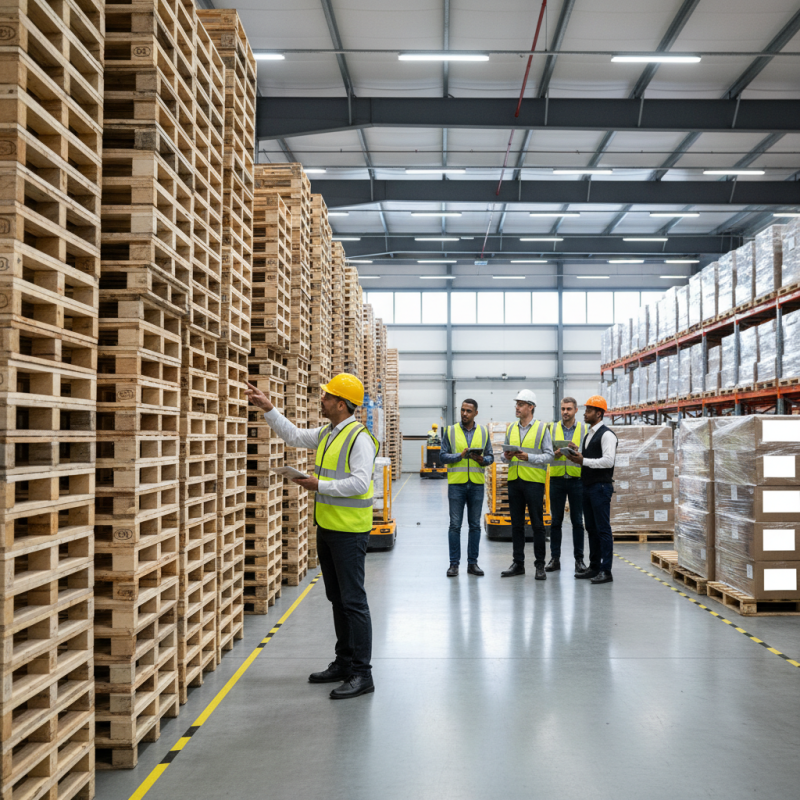
Pallet edges play a crucial role in warehouse management. They provide structural support, ensuring pallets are stable during storage and transportation. Properly arranged pallet edge heights can maximize space utilization. This can lead to improved inventory flow and quick access to products. However, many warehouses overlook this detail, resulting in inefficient layouts.
When managing pallets, attention to edge alignment is vital. Misaligned pallets can lead to safety hazards. Workers risk injury as they navigate through tight spaces. Regular checks can help maintain proper alignment and prevent accidents. Each pallet should be inspected for damage; this not only helps in inventory accuracy but also reduces potential loss.
Understanding the nuances of pallet edge management can enhance efficiency. Using clear labeling on pallets can assist in quick identification. Relying on memory alone often leads to errors. Workers might misplace items, causing delays in order fulfillment. Regular training on pallet handling can address these pitfalls, promoting a safer and more organized warehouse environment.
Pallet Edge Utilization in Warehouse Management
The chart above illustrates the efficiency percentage of different pallet edge configurations in warehouse management. A tightly packed configuration yields the highest efficiency, while unpacked pallets show significant inefficiencies. Understanding these metrics can help optimize warehouse operations.
Key Benefits of Efficient Pallet Edge Organization
Efficient pallet edge organization is crucial for warehouse management. According to a recent industry report, organized pallets can reduce retrieval time by up to 30%. When products are easily accessible, workers can pick items quickly. This efficiency often translates into higher productivity levels.
Additionally, proper pallet edge management minimizes damage to goods. A study indicated that mismanaged pallets can lead to a 15% increase in product loss. Keeping pallets well-organized limits mishaps and saves costs. Furthermore, engaging workers in a systematic approach to organization can improve morale. They feel more in control and less stressed.
Yet, many warehouses struggle with this aspect. Frequent disruptions arise when pallets are not aligned correctly. Empty spaces or overly packed edges complicate access. This often leads to frustration for team members. Organizations must reflect on these issues and prioritize efficient pallet organization.
Pallet Edge Tips for Efficient Warehouse Management - Key Benefits of Efficient Pallet Edge Organization
| Dimension |
Description |
Key Benefit |
| Inventory Turnover |
Rate at which inventory is sold and replaced over a period. |
Improves cash flow and reduces holding costs. |
| Space Utilization |
Efficient use of warehouse space for storage and operations. |
Maximizes cubic capacity and minimizes wasted space. |
| Order Picking Efficiency |
Speed and accuracy of picking items from the warehouse. |
Reduces labor costs and improves customer satisfaction. |
| Pallet Accessibility |
How easily pallets can be accessed and retrieved. |
Increases operational efficiency and reduces retrieval time. |
| Damage Reduction |
Measures taken to prevent damage to goods during storage. |
Lowers replacement costs and enhances product lifetime. |
Best Practices for Implementing Pallet Edge Solutions
Implementing pallet edge solutions can significantly enhance warehouse efficiency. According to a report by the Warehouse Education Research Council, optimized pallet management can reduce operational costs by up to 20%. To start, assess your current pallet usage. Are you tracking their movement effectively? Many warehouses overlook this crucial aspect.
Another best practice is to standardize pallet sizes across the warehouse. Consistency simplifies space utilization. The National Forklift Safety Code suggests that using standardized pallets can improve load stability and reduce damages by 30%. However, switching to standard sizes may require initial investment in new pallets and training staff.
Additionally, consider using technology to manage pallet inventory. Software solutions can streamline tracking and reporting. Yet, some facilities are resistant to change. They cling to traditional methods, which can result in inefficiencies. Embracing the right technology can transform processes. Data from the Material Handling Industry indicate that facilities using automated systems often see a 40% increase in throughput. This transition may feel daunting, but the rewards can be substantial.
Tools and Technologies for Enhanced Pallet Edge Management
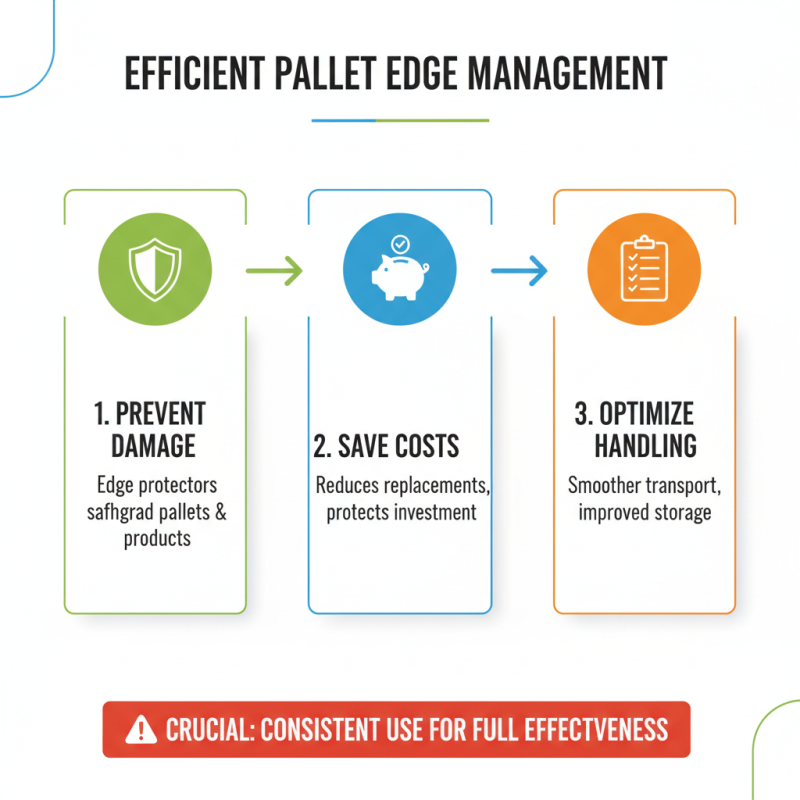
Efficient pallet edge management is crucial for any warehouse operation. Utilizing specialized tools can significantly optimize storage and handling. For instance, edge protectors can prevent damage to pallets, preserving the products during transport. This small investment can save costs in the long run. However, if not used consistently, the effectiveness diminishes.
Automated tracking technologies can enhance pallet management. RFID tags and barcode systems allow for easy monitoring of pallet inventory. It's essential to ensure that staff is trained adequately to use these systems. If the training is lacking, errors can occur. Additionally, software solutions can simplify the scheduling and routing of pallet movement. Yet, if the software isn’t user-friendly, it may lead to frustration among workers.
Frequent audits of pallet management processes are necessary. This involves assessing the efficiency of current tools and making adjustments as needed. Without regular evaluations, problems may go unnoticed. Implementing new technologies requires a willingness to adapt. Resistance to change can hinder progress. Not every tool will fit every warehouse, so continuous reflection on performance is vital for success.
Monitoring and Evaluating the Effectiveness of Pallet Edge Strategies
Monitoring and evaluating the effectiveness of pallet edge strategies is vital for streamlining warehouse operations. Regular checks can reveal issues in layout and workflow. For instance, if a specific pallet type consistently causes delays, it may require reevaluation or replacement. Using data from reports helps identify patterns in inefficiencies. Teams can focus on the most problematic areas, improving overall productivity.
It's important to acknowledge that not all strategies yield positive results. Sometimes, a new approach may initially complicate processes. For example, introducing automated systems might not align well with existing workflows. This misalignment can lead to unexpected downtime. Constantly assessing the impact of changes is crucial. Regular feedback from employees can provide valuable insights. Open discussions can reveal what truly works and what doesn’t. Adjustments should be made based on real experiences rather than assumptions.