How to Use Slip Sheets for Efficient Material Handling?
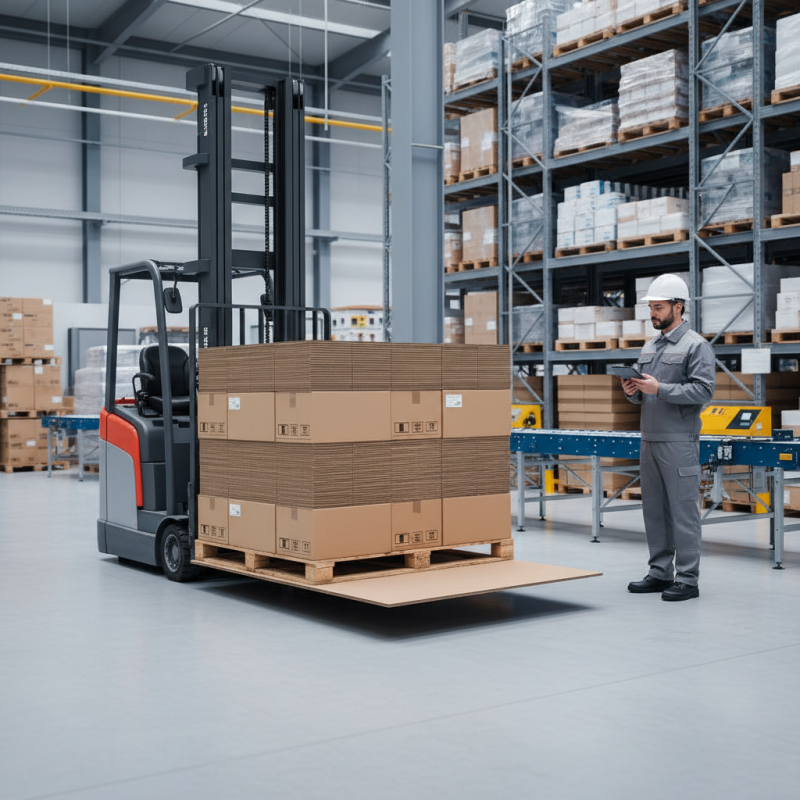
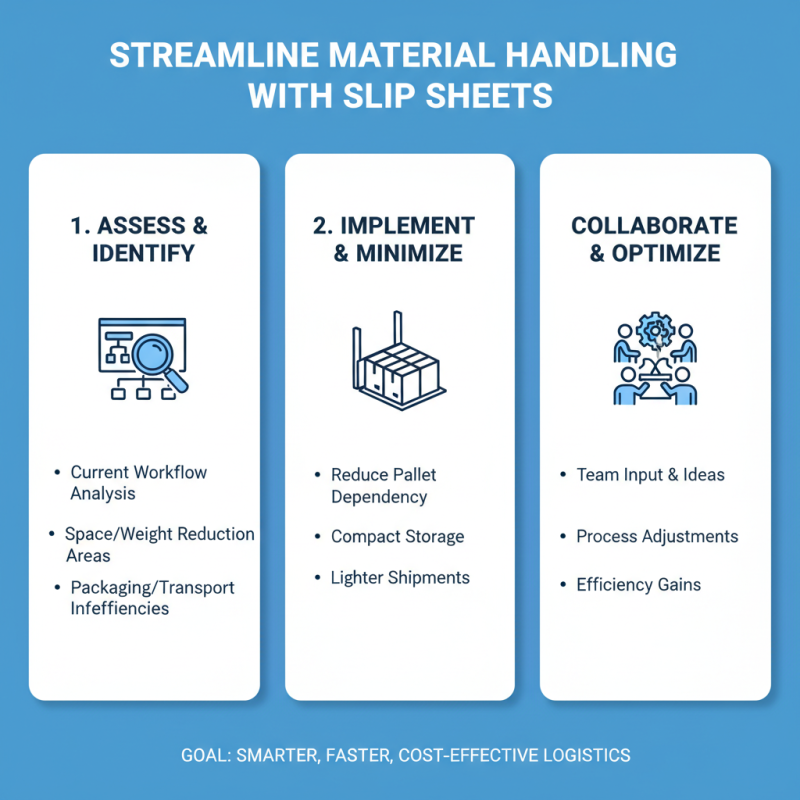
In the world of material handling, efficiency is key. Slip Sheets offer a revolutionary approach to transporting goods. Made from sturdy materials, these thin sheets replace traditional pallets. They take up less space and are lighter, making logistics more streamlined.
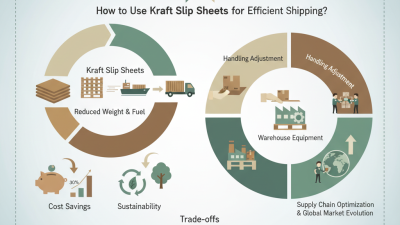
Using Slip Sheets can reduce shipping costs significantly. They are easier to stack and store, which saves valuable warehouse space. However, adopting this method may require adjustments in your handling systems. Training staff is essential to ensure proper use of Slip Sheets.
While they are highly effective, there are potential challenges. Some workers may find them unfamiliar at first. Initial costs for equipment may be a concern for some companies. Despite these hurdles, the benefits of Slip Sheets often outweigh the drawbacks. Their ability to improve efficiency is undeniable in today’s fast-paced supply chain.
What Are Slip Sheets and Their Role in Material Handling?
Slip sheets are flat, thin sheets made from materials like plastic or heavy paper. They serve as a base for stacking goods. Their primary function is to facilitate easier and more efficient handling of products. According to a report by the Material Handling Industry of America, using slip sheets can reduce material handling costs by up to 30%. This number is significant and highlights the growing trend among industries.
These sheets are particularly useful in tight spaces. They require less room than traditional pallets, optimizing warehouse space. In many operations, companies have reported a 50% increase in loading efficiency when switching to slip sheets. This statistic emphasizes the need for industries to adapt innovative solutions. However, using them is not without its challenges.
Slip sheets necessitate specific equipment for loading and unloading. Not all facilities are equipped for this change, which can hinder integration. Additionally, training staff on proper usage can also pose a challenge. The transition can disrupt workflows if not managed well. This suggests a need for careful planning and assessment of current systems before adoption. In some cases, the shift to slip sheets may require a reevaluation of existing processes and equipment.
How to Use Slip Sheets for Efficient Material Handling? - What Are Slip Sheets and Their Role in Material Handling?
| Material Type |
Slip Sheet Material |
Weight Capacity (lbs) |
Advantages of Using Slip Sheets |
Recommended Handling Equipment |
| Palletized Goods |
Cardboard |
2000 |
Space-saving, lightweight, cost-effective |
Slip Sheet Handlers |
| Food Products |
Plastic |
1500 |
Hygienic, moisture-resistant |
Forklifts with Slip Sheet Attachments |
| Automotive Parts |
Composite Material |
2500 |
Durable, effective for heavy loads |
Pallet Jacks and Forklifts |
| Electronics |
Corrugated Plastic |
1000 |
Shock-resistant, lightweight |
Specialized Handling Equipment |
| Consumer Goods |
Heavy-duty Cardboard |
1800 |
Eco-friendly, reusable |
Forklifts, Automated Guided Vehicles |
Benefits of Using Slip Sheets Over Traditional Pallets
Slip sheets are becoming a popular choice for material handling. They provide several benefits over traditional pallets. First, slip sheets are much lighter. This weight reduction can lead to significant savings in shipping costs. With lighter loads, transporting goods becomes easier and more efficient.
Another advantage is the space-saving feature of slip sheets. They occupy less space in storage and during transportation. This allows companies to maximize their storage capacity. The reduction in handling equipment, like forklifts, can also lower operational costs. However, not every warehouse is suited for slip sheets. Adapting to slip sheets requires adjustments in material handling processes.
Moreover, using slip sheets leads to reduced environmental impact. Their recyclability is a plus for eco-conscious businesses. Despite these benefits, some may find switching to slip sheets challenging. Employees need proper training to handle them effectively. Incorporating slip sheets into operations may take time but can be worthwhile in the long run.
How to Choose the Right Slip Sheets for Your Operations
Choosing the right slip sheets for your operations is crucial for optimizing material handling. Slip sheets are thin, flat sheets used to support and stabilize products during transport. Recent industry reports indicate that using slip sheets can reduce storage space by up to 30%. This allows companies to maximize their warehouse efficiency.
When selecting slip sheets, consider material compatibility. Common options include plastic and fiberboard. Each has its strengths. Plastic is durable and water-resistant. Fiberboard is biodegradable and lightweight. The decision should factor in load weight, type of goods, and environmental impact.
Thickness is another important aspect. Standard slip sheets range from 0.125 to 0.500 inches. Thinner sheets save weight but may not support heavy loads effectively. Misjudging your needs could lead to product damage. Assess the size of pallets and load configurations too. Ideally, slip sheets should fit snugly, preventing movement during shipping. Implementing the wrong size can create inefficiencies.
Material Handling Efficiency with Slip Sheets
This chart compares the efficiency ratings of various material handling methods, highlighting the advantages of slip sheets over conventional pallets and other materials. Slip sheets have been rated highest, showcasing their effectiveness in material handling operations.
Best Practices for Maintaining and Storing Slip Sheets Efficiently
Maintaining and storing slip sheets effectively is crucial for seamless material handling. Start by keeping them clean and dry.
Dirt and moisture can lead to damage. After use, make sure they are stacked properly. Over time, stacks can become unstable. An unstable stack may cause slips or falls.
Regularly check for wear and tear. Damaged slip sheets can hinder efficiency.
Consider the storage environment. A climate-controlled area is ideal. Extreme temperatures can warp the sheets. Organize them by size and type. This makes retrieval faster.
Mark storage areas clearly. Employees need to know where to find different sizes.
Training is essential. Ensure that all staff know proper handling techniques. This helps reduce accidents. Encourage feedback on storage practices.
There may be points of improvement that often go unnoticed. Ultimately, a thoughtful approach will lead to better workflow and safety.