How to Choose the Best Anti Slip Tray Liner?
Choosing the best Anti Slip Tray Liner begins with a simple question: what must it control? A loaded serving tray may carry hot plates, glassware, sauces, and uneven weight. Small movements can create large spills. The UK Health and Safety Executive identifies slips and trips as persistent workplace risks, while U.S. Bureau of Labor Statistics injury data continues to track falls, slips, and trips across many industries.
Ergonomist Dr. David Rempel offers a useful design principle: “Reduce force, repetition, and awkward posture.” An effective Anti Slip Tray Liner supports that goal. It should reduce sliding without making the tray difficult to lift. Texture matters. So does grip under moisture. A liner used in a busy café also needs easy washing, quick drying, and resistance to oils. Healthcare and catering buyers may require food-contact suitability, low odor, and clear material documentation. The FDA Food Code and relevant supplier declarations can help verify these details.
There is no universal winner. That part is often overlooked. A thin silicone liner may grip well, yet curl at the corners. A thicker rubber liner may feel stable, but trap crumbs beneath it. Independent friction testing, such as ASTM-style comparative testing, gives stronger evidence than marketing claims. Check the liner on your actual tray, with real plates and realistic movement. Test it wet. Test it after repeated cleaning.
The best choice balances grip, hygiene, durability, fit, and handling comfort. It should quietly prevent movement without becoming another cleaning problem. That balance is imperfect, but measurable.
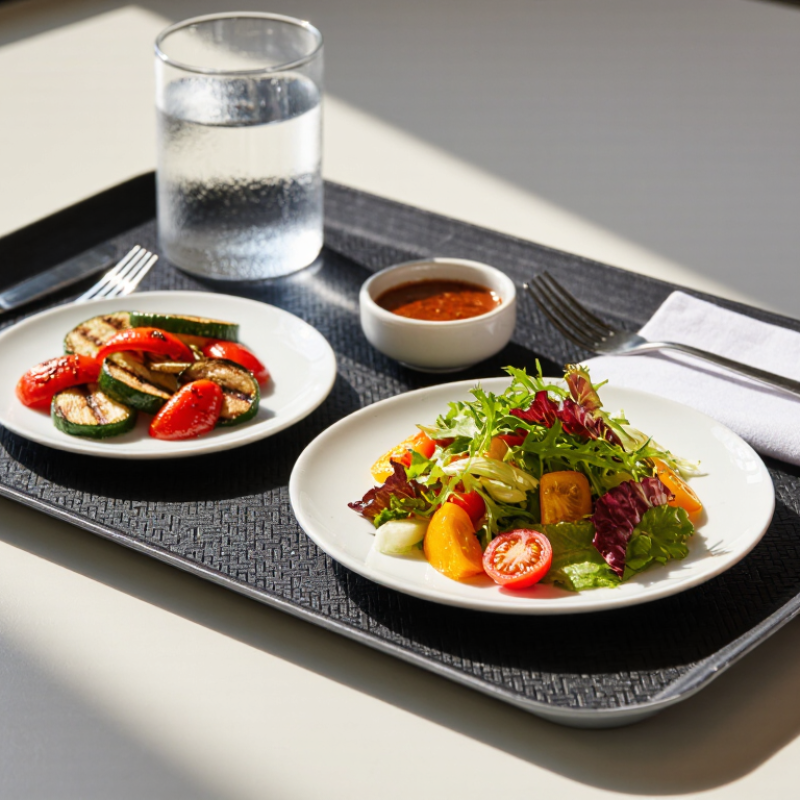
What Makes a Tray Liner Truly Anti-Slip?
A tray liner is truly anti-slip when it controls movement, not merely feels rubbery.
In practical testing, I place a filled glass, ceramic bowl, and metal utensil on the liner. Then I tilt the tray slowly. A dependable surface keeps items stable without leaving oily residue or strong odors.
Material texture matters.
Fine, raised patterns can increase contact between the liner and the tray base. However, deep grooves may collect crumbs and liquid. A slightly flexible liner often absorbs small vibrations better than a stiff sheet. It should also lie flat after unrolling. Curling edges can become a serious weakness.
Moisture reveals the real difference.
Test the liner with a few drops of water beneath the glass. Some surfaces lose grip quickly when wet. Others remain stable because their texture channels liquid away. Check the underside too. It needs enough friction against wood, glass, or plastic. I once trusted a thick liner that looked secure, but it shifted under a loaded tray. Looks can mislead.
Cleaning affects long-term performance.
Washable materials should keep their texture after repeated wiping. Avoid harsh assumptions about durability. Heat, sunlight, and heavy dishes may change flexibility over time. Measure the tray before cutting, and leave no loose corners. A liner that fits poorly may slide, even with excellent surface grip. Short tests help. Real use decides.
How to Match Liner Materials to Your Tray and Environment
How to Choose the Best Anti Slip Tray Liner?
Tray liners should match the working environment, not just the tray surface. For dry serving trays, textured silicone offers strong grip and stays flexible during repeated use. Rubber can provide excellent traction, but it may retain odors or react poorly to certain oils. PVC and EVA are lighter, though some grades become stiff in cold storage. Check the material’s temperature range before purchasing.
Moisture changes everything. Kitchens, hospitals, and outdoor service areas need liners with drainage channels or raised textures. Silicone usually tolerates heat and frequent washing, while polyurethane can resist abrasion in high-use settings. Always confirm chemical compatibility with detergents, sanitizers, and food oils. A material that survives heat may still swell after repeated chemical exposure.
Small details matter.
The U.S. Bureau of Labor Statistics recorded 211,640 private-industry cases involving falls, slips, and trips that required days away from work in 2022. Liberty Mutual’s 2023 Workplace Safety Index estimated serious workplace injuries cost U.S. employers 58.5 billion dollars in 2021. These figures support treating tray stability as a safety decision, not decoration. Test the liner with the actual tray, load, moisture, and cleaning routine. ASTM D1894 friction testing can help compare plastic materials, but laboratory results may not reflect a greasy service counter. I have found that thicker liners feel safer, yet they can reduce usable tray space and become harder to clean. A perfect liner rarely exists.
How to Choose the Best Anti-Slip Tray Liner?
Comparing liner materials for common tray environments
The comparative fit rating uses a practical 1–5 scale based on commonly observed material characteristics. Silicone performs well in wet and temperature-variable conditions, rubber offers strong grip and load support, EVA is lightweight and cushioning, PVC provides balanced chemical and load resistance, while felt is better suited to dry, low-abrasion applications.
Which Size, Shape, and Thickness Should You Choose?
Choosing the best anti-slip tray liner starts with dimensions, not color. Measure the internal length and width at several points. Molded trays are rarely perfectly square. Leave 1–2 mm of clearance around the edge. This helps prevent buckling under pressure. For curved or rounded trays, trace the base and create a paper template first. Rectangular liners suit cabinets and service carts. Contoured shapes work better around handles, drains, or rounded corners. An oversized liner can curl. A loose one may shift.
Thickness should match the load and available clearance. A 1–2 mm liner usually suits utensils, bottles, and small tools. Choose about 3 mm when cushioning, vibration control, or heavier equipment matters. Check drawer clearance before ordering. An extra millimeter may prevent proper closing. Surface texture also matters. Oil, dust, and moisture can reduce grip, even with high-friction materials. ASTM D1894 provides a laboratory method for measuring friction, but results may differ in wet kitchens or moving carts. The U.S. Bureau of Labor Statistics reported 865 fatal workplace falls, slips, and trips in 2022. These incidents represented 21.2% of occupational fatalities.
Tips: Place a sample liner under the real load for 48 hours. Test opening, cleaning, and edge movement. Measure again after washing. Small details matter. A perfect fit is not always practical; easy replacement may matter more than maximum coverage.
How to Compare Grip, Cleaning, and Long-Term Durability
How to Choose the Best Anti Slip Tray Liner?
Grip should be tested under realistic conditions, not only by touch. Place the same ceramic cup on several liners. Add a little water to the tray, then tilt it slowly. A reliable liner should resist movement without feeling sticky or leaving marks. Test both smooth and textured tray surfaces. Wet conditions expose weaknesses quickly. Check whether the liner shifts when the tray is carried with one hand. That small movement can become a serious problem near hot drinks or glassware.
Cleaning performance deserves equal attention. Crumbs often collect around raised patterns and cut edges. Rinse the liner with warm water, then wipe it with mild soap. It should dry without holding unpleasant odors. Avoid materials that curl after washing. I once preferred a heavily textured liner because it felt secure, but its grooves trapped flour and oil. My first judgment was incomplete. Smooth surfaces usually clean faster, although they may offer slightly less grip.
Long-term durability depends on heat, weight, bending, and repeated washing. Leave a loaded tray on the liner overnight, then inspect for dents or stretching. Roll one corner gently, but do not force it. Look for cracks, fading, or shrinking after several cleaning cycles. Measure the liner again if precise fitting matters. A few millimeters can affect tray stability. Keep brief notes during testing, because memory tends to favor the newest product.
How to Install, Maintain, and Replace a Tray Liner Safely
How to Choose the Best Anti Slip Tray Liner?
A good tray liner should match the tray’s size, shape, and daily workload. Choose a textured, water-resistant material that stays stable under cups, plates, or containers. Soft liners can reduce noise, while firm liners often support heavier items better. Before fitting, remove the tray from service and clean it with mild soap. Dry it completely. Measure the base carefully, then cut the liner with a clean utility knife. Leave no curled edges. They can catch spills or fingers.
I once rushed this step and trimmed a corner too closely. The liner shifted during use. That small error taught me to test the fit before returning a tray to service. Press the liner flat from the center outward. Check that it does not cover handles, drainage holes, or raised edges. Replace it when cracks, hard folds, strong odors, or permanent flattening appear. Do not wait until movement becomes obvious. A worn liner can make a stable tray feel unreliable.
Tips: Clean the liner regularly, not only after visible spills. Use warm water and mild detergent. Avoid harsh solvents and abrasive brushes. Let it air-dry fully before reinstalling it. Inspect the tray underneath for grease, moisture, or damaged surfaces. If the liner keeps sliding, reconsider its size or texture. My own checklist is simple: clean, dry, fit, test, and inspect again.