How to Use Slip Sheets Effectively for Global Sourcing?
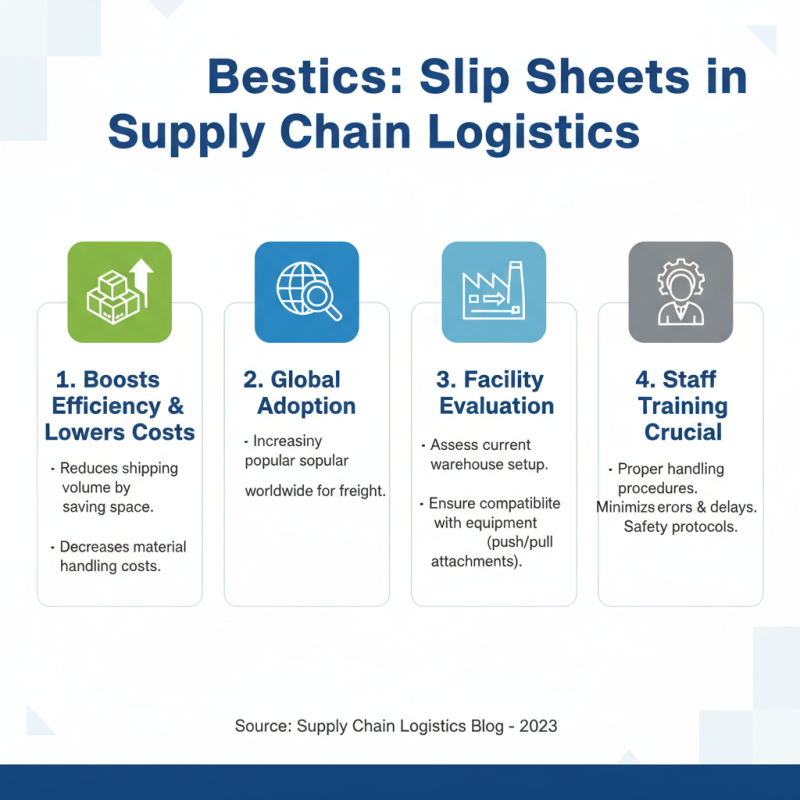
In global sourcing, efficiency and cost-effectiveness are crucial. One tool that has gained traction is the Slip Sheet. This lightweight alternative to pallets streamlines shipping and storage processes. By reducing weight and volume, Slip Sheets help companies save on transportation costs.
Using Slip Sheets can improve overall supply chain performance. They allow for more products per shipment, maximizing container space. However, not all businesses understand how to implement them. Companies need to train their staff properly. The transition may require adjustments in handling processes.
Incorporating Slip Sheets isn't without challenges. Not all equipment is compatible, and there may be initial resistance from workers. Evaluating the overall impact is essential. Companies must assess their current logistics processes to effectively adopt Slip Sheets. Understanding these dynamics can lead to a smoother integration and significant cost savings.

How Slip Sheets Streamline Global Sourcing Operations
Slip sheets are revolutionizing the way businesses manage their global sourcing operations. These thin, flat sheets replace traditional pallets, significantly reducing costs and improving efficiency. By using slip sheets, companies can optimize space in shipping containers and warehouses, allowing for more goods to be transported at once. This not only lowers transportation costs but also minimizes the environmental impact of logistics.
The implementation of slip sheets requires careful planning. Businesses need to train staff in their use and ensure the equipment is compatible. While slip sheets provide clear advantages, there can be a learning curve. Transitioning from pallets to slip sheets may lead to initial challenges in handling and loading. It's essential to assess these hurdles and provide the necessary support to the team. Streamlining the process can lead to smoother operations and greater cost savings in the long run.
Understanding the Material and Design of Slip Sheets for Effective Use
Slip sheets are a cost-effective alternative to traditional pallets in global sourcing. Understanding the material and design of slip sheets is crucial for successful implementation. Typically made from high-density polyethylene or laminated paper, they are lightweight yet sturdy. This allows for efficient handling and stacking. Their flat design enables better space utilization in shipping containers and warehouses.
However, it's important to note that not all slip sheets are created equal. Some may vary in thickness and durability. Assessing the specific needs of your products is essential. For instance, heavy or irregularly shaped items may require more robust designs. Mishandling or using inadequate slip sheets can lead to product damage.
Training staff in proper usage is another key factor. They must know how to deploy slip sheets efficiently. Even with the best materials, improper handling negates their advantages. Continuous evaluation and feedback from the team can help optimize the processes. Embracing trial and error fosters improvement and enhances reliability in global sourcing.
Cost-Benefit Analysis: Savings when Using Slip Sheets Compared to Pallets
Slip sheets have gained popularity in global sourcing, providing distinct advantages over traditional pallets. According to a report by the Material Handling Industry, companies can save up to 40% in shipping costs by switching to slip sheets. This reduction stems from their lightweight nature, allowing for higher payloads within the same transport space. The ability to stack products more efficiently also leads to increased warehouse optimization.
Beyond cost savings, slip sheets offer enhanced flexibility. They can be adapted for various products and easily integrated into automated systems. A study by the International Journal of Logistics Management found that firms using slip sheets reported a 30% decrease in handling time. However, it’s crucial to note that not all products are suitable for this method. Some items may require additional protection or stabilization. This highlights the need for a thorough assessment before implementation to ensure maximum efficiency is achieved.
While slip sheets present clear advantages, companies must remain vigilant. Transitioning to a new system involves training and adapting existing logistics. There’s also the risk of resistance from staff accustomed to pallets. Balancing these factors is vital to leverage the full spectrum of benefits that slip sheets provide in global sourcing strategies.
Cost-Benefit Analysis: Savings when Using Slip Sheets Compared to Pallets
Case Studies: Successful Global Sourcing with Slip Sheets Implementation
Slip sheets have become a pivotal component in global sourcing strategies.
Their ability to reduce packaging weight and save space offers significant advantages.
One success story involves a manufacturer that transitioned to slip sheets,
cutting freight costs by 20%.
Despite initial challenges with handling, proper training and implementation led to better efficiency.
This showcases how understanding the whole process is crucial.
Tips: Ensure your team understands the handling differences between slip sheets and pallets.
Regular training sessions can enhance skillsets. Also, encourage feedback during the rollout phase.
Small adjustments based on real experiences can lead to better results.
Another case study highlights a company that faced space constraints in its warehouse.
By integrating slip sheets, they managed to increase storage density by 30%.
However, adapting to changes in the supply chain required patience.
Teams needed time to adjust workflows, leading to some initial confusion.
Learning from these hurdles is essential for long-term success.
Tips: Collaborate with your logistics team to identify potential obstacles early on.
Testing slip sheets in small batches may prevent larger disruptions.
Moreover, document the learning curve to refine future processes.