Inquiry
Form loading...

How to Choose the Right Pallet Edge for Shipping?

Choosing the right Pallet Edge can protect products, stabilize loads, and reduce damage during handling. The correct edge profile depends on pallet dimensions, cargo weight, stacking pressure, and transport conditions. A light carton shipment may need only a narrow fiberboard edge. Heavy machinery often requires thicker, reinforced protection. Appearance alone is not enough.

Measure the pallet and the load carefully. Check whether straps, stretch film, or corner boards will press against the edge. A strong protector should distribute pressure instead of cutting into boxes. It should also remain stable during forklift movement, warehouse storage, and repeated loading. Moisture matters. Fiber-based edges may weaken in damp environments, while plastic alternatives can offer better resistance but may increase cost. Small details matter.

Test the edge in realistic conditions.

Place a sample load on a pallet. Add the intended straps and wrapping. Then inspect crushed corners, shifted cartons, and strap marks after handling. This simple trial can reveal weaknesses that specifications miss. One common assumption fails: the thickest Pallet Edge is not always the best choice. Excess material may waste space or interfere with automated equipment. Selection should balance protection, handling efficiency, sustainability, and budget.

Reliable suppliers should provide material details, dimensional tolerances, and performance guidance. Ask how the product performs under compression and humidity. Keep records of test results and shipment damage. The process may not be perfect. Conditions change, and one successful trial cannot prove universal performance. Still, careful measurement and honest review create a stronger basis for choosing the right Pallet Edge.
How to Choose the Right Pallet Edge for Shipping?

Understanding Pallet Edge Types and Their Shipping Functions

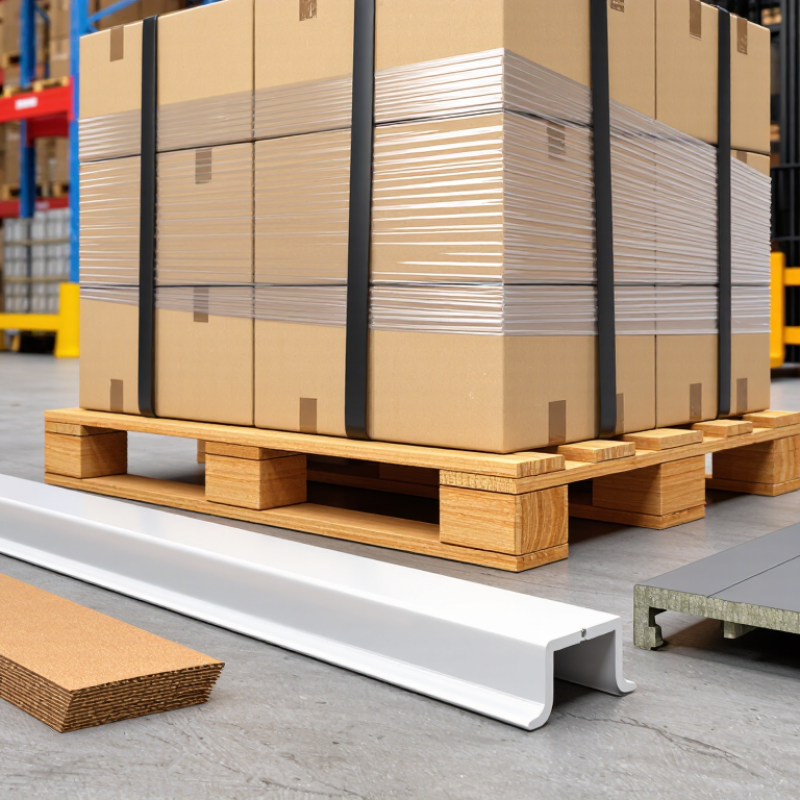
Choosing a pallet edge starts with identifying the load’s weak points, not merely its appearance. Vertical fiberboard edge boards protect carton corners during strapping and stacking. They spread strap pressure across a wider surface, reducing crushed boxes and shifting loads. Horizontal edge boards reinforce each pallet layer and help distribute weight evenly. Laminated fiberboard suits light, dry shipments and is often recyclable. Moisture changes that decision.

Plastic edge profiles resist rain, condensation, and repeated handling better than paper-based protectors. They work well for chilled cargo or extended storage. However, rigid plastic can transfer impact into fragile products if cushioning is inadequate. That detail matters. Foam-lined edges offer softer contact for glass, polished surfaces, or sensitive equipment. Their protection is useful, but they may compress under heavy straps.

Metal edge guards provide strong compression resistance for dense machinery and heavy industrial loads. They require careful fitting, because poorly seated edges can damage cartons or catch during handling. The selected edge should match the pallet height, strap tension, product weight, and expected stacking pressure. Check the corners after strapping, then inspect them after vibration or short-distance movement. A common mistake is choosing the strongest edge without testing the packaging beneath it. No edge type solves every failure. A small trial pallet may still reveal crushed corners, moisture softening, or strap marks before full shipment.

How to read this chart: Corrugated fiberboard edge protectors are lightweight, recyclable, and suitable for most standard palletized shipments. Plastic edges provide better moisture resistance and can be reused. Steel edges offer the highest impact and compression protection for heavy or high-value loads, while wood edges are useful for rugged applications but add weight. Select the edge type according to load weight, stacking pressure, transport environment, and reuse requirements. Scores are comparative guidance on a 1–5 scale, where 5 represents the strongest relative performance.

Assessing Load Weight, Dimensions, and Stability Requirements

How to Choose the Right Pallet Edge for Shipping?

Assess the load before choosing a pallet edge. A 900-kilogram machine needs more support than clothing cartons. Measure the pallet length, width, and total stack height. Then check where pressure meets the edge protector. A narrow edge can crush under tight straps. A wider profile may protect exposed corners better.

In warehouse trials, I compare edge strength with the actual load, not an ideal sample. I watch for leaning cartons, strap marks, and crushed corners after handling. Stability also depends on weight distribution. Heavy items placed high can turn a strong pallet into an unstable one. Use an edge that matches the load’s height and shape. This sounds obvious, yet it is often missed. I have seen careful packaging fail because one oversized box extended beyond the pallet.

Tips: Choose thickness according to load weight. Cover every exposed vertical corner. Keep straps centered on the edge. Test one packed pallet through loading, storage, and unloading. Record movement and damage. If results remain unclear, adjust the design and test again. One trial is rarely enough. Dimensions guide the decision, but real handling reveals weaknesses that measurements cannot show.

How to Choose the Right Pallet Edge for Shipping? - Assessing Load Weight, Dimensions, and Stability Requirements

Load Profile Typical Gross Load Weight Typical Pallet Footprint Load Height Stability Requirement Recommended Edge Protector Specification Suggested Quantity and Placement Additional Shipping Controls
Light and Compact Up to 250 kg Up to 1.2 m × 1.0 m Up to 1.2 m Low to moderate; cartons are uniform and tightly stacked Four vertical corner protectors; add horizontal protectors where straps contact the cartons Use stretch film or light strapping. Keep the load centered and avoid unsupported carton overhang.
Medium General Cargo 250–600 kg Up to 1.2 m × 1.0 m Up to 1.6 m Moderate; the load may shift during braking, turning, or handling Four full-height vertical protectors and two to four horizontal protectors under each strap path Use at least two straps in each direction when suitable. Apply stretch film after strapping to contain loose cartons.
Heavy or Dense Cargo 600–1,000 kg Up to 1.2 m × 1.0 m Up to 1.8 m High; concentrated weight can crush carton corners and increase strap pressure Four reinforced vertical protectors; use horizontal protectors at every strap position and near the top and bottom load zones Use load-rated strapping, anti-slip sheets, and a pallet strong enough for the static and dynamic load. Check for balanced weight distribution.
Extra-Heavy or Industrial 1,000–1,500 kg Up to 1.2 m × 1.0 m Up to 1.8 m Very high; the load may have high density, uneven weight, or a high center of gravity Four or more vertical protectors where needed; place horizontal protectors at all strap contact points and at major load transitions Use engineered strapping tension, anti-slip material, corner-to-corner restraint where appropriate, and a documented load-securing plan.
Tall, Narrow, or High Center of Gravity Any weight above 250 kg Footprint is small compared with load height Above 1.6 m or height exceeds the shortest footprint dimension Very high; increased risk of tipping, leaning, and strap-induced deformation Four full-height vertical protectors plus horizontal protectors at multiple levels; add top protection if straps can cut into the load Reduce height where possible, widen the base, use anti-slip sheets, and apply stretch film or mesh restraint. Confirm the load is stable before movement.
Irregular or Mixed Carton Load 250–1,000 kg Variable; gaps or uneven edges may be present Variable High; uneven surfaces can create localized strap pressure and movement Use vertical protectors on exposed corners and horizontal protectors wherever straps cross uneven carton surfaces Fill voids, use slip sheets or separator boards, square the load, and do not rely on edge protectors to correct poor stacking.
Moisture-Exposed or Outdoor Transit Any weight Any standard pallet footprint Any height Depends on weight and exposure; moisture can reduce paperboard strength Use the quantity required for the load weight; protect all strap contact points and exposed vertical corners Use waterproof wrapping or a suitable cover. Prevent standing water and verify that the pallet, packaging, and edge protector materials are compatible.
Selection note: The specifications above are practical starting ranges, not a substitute for package testing. Final selection should consider pallet type, load distribution, strap tension, transport mode, handling equipment, vibration, braking forces, moisture, and applicable packaging or transport requirements. The edge protector must be long enough to cover the complete strap contact area and should not extend beyond the pallet in a way that creates a handling hazard.

Matching Pallet Edges to Packaging and Handling Conditions

Pallet edges should match the packaging, not merely the pallet size. Start with the product’s weakest contact points. Fragile cartons need broad, smooth edges that distribute strap pressure. Heavy cases may require rigid protectors with stronger corner support. A narrow edge can cut into corrugated walls during tightening. That damage often appears after transport, not during packing.

Handling conditions matter just as much. Frequent forklift movement calls for edges that resist crushing and shifting. Warehouse stacking may require taller protectors to stabilize several cartons. For humid storage, moisture-resistant materials deserve careful consideration. Cold environments can make some materials less flexible. Check the edge after a real handling cycle. It may perform differently than it did in a clean test area.

Packaging geometry also changes the choice. Evenly aligned boxes suit straight, continuous edges. Uneven loads may need flexible protection or additional corner support. Strapping tension should be tested with the actual carton strength. More tension is not always safer. I have seen teams overprotect a light shipment, adding cost and weight without improving stability. That choice looked efficient, but it was not. A better approach is to compare edge height, thickness, compression strength, and moisture tolerance against the shipment’s route. Record crushed corners, strap marks, and movement after testing. Small flaws reveal useful information. Recheck the design when carton materials or handling equipment change.

Comparing Material Durability, Cost, and Environmental Impact

How to Choose the Right Pallet Edge for Shipping?

Pallet edges protect cartons from strap pressure, forklift contact, and stacking stress. The right material depends on shipment weight, moisture, and handling distance. Corrugated fiberboard edges are lightweight and economical. They suit dry, short-distance shipments with moderate loads. Molded pulp offers similar benefits, but its strength can fall when exposed to water. Plastic edges resist moisture and repeated handling. However, they usually cost more and may create difficult recycling questions. Steel provides exceptional compression strength, yet it adds weight and can damage cartons if poorly fitted.

Cost should include more than the purchase price. A low-cost edge may fail during loading, causing crushed corners and rejected goods. Replacing damaged products is rarely cheap. Measure edge thickness, strap tension, pallet height, and storage conditions before choosing. Simple compression tests can reveal weaknesses. Test real loads, not empty pallets. Small details matter.

Environmental impact also needs careful evaluation. Recycled fiber edges often use fewer resources and fit established paper-recycling systems. Still, wet or contaminated material may be rejected. Reusable plastic can reduce repeated purchases, but transport emissions and end-of-life recovery affect its advantage. Steel lasts longer, though its production is energy intensive. There is no perfect option. I would review damage rates, reuse cycles, disposal routes, and supplier specifications together. Sometimes the greener choice performs poorly. That possibility deserves honest testing.

Selecting and Testing the Best Pallet Edge for Shipment Safety

How to Choose the Right Pallet Edge for Shipping?

Selecting the right pallet edge begins with the product, not the packaging catalog. A heavy machine needs stronger corner protection than a carton of textiles. Measure load weight, stacking height, strap tension, and expected humidity. A dense fiberboard edge may resist strap pressure, while a plastic edge can perform better in wet storage. Small details matter.

The World Bank’s 2023 Logistics Performance Index collected responses from 4,090 logistics professionals across 139 countries. Its findings show that shipment reliability depends on every supply-chain handoff.

Pallet edges must therefore be tested for real handling conditions, not only visual fit. Use ISTA 3A for packaged-product transport testing, including drops, vibration, and conditioning. ASTM D4169 can also help assess distribution-cycle performance.

Record corner crush, strap cutting, pallet movement, and carton deformation after each test.

Test the weakest load first. That is where mistakes appear. My initial choice is often too thin when straps are tightened by automated equipment. A practical trial should compare at least two edge thicknesses under equal load conditions.

Inspect the corners after forklift movement, stacking, and overnight compression. Moisture can quietly reduce fiber strength. A clean laboratory result can still mislead. Repeat testing with uneven cartons, shifted loads, and damaged pallets. Real shipments rarely behave perfectly.