Why Use Load Securement Airbags for Shipping?
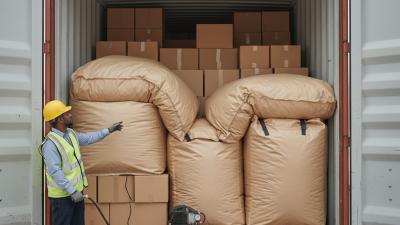
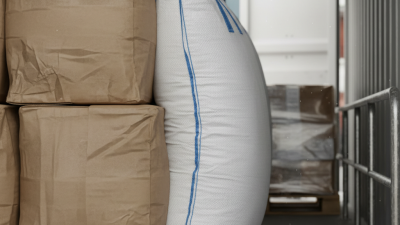
Freight rarely stays perfectly still during a journey. A sudden stop, a sharp turn, or repeated vibration can shift pallets into empty spaces inside a trailer or container. Load Securement Airbags help fill those gaps, limiting movement and reducing the risk of damaged cartons, crushed edges, or unstable cargo. Small gaps matter.
These inflatable dunnage bags are placed between suitable loads and inflated to the pressure specified for the product and application. Their effectiveness depends on choosing the right size and strength, checking the surrounding cargo, and following the manufacturer’s installation guidance. A bag that is too small, poorly positioned, or overinflated may not provide dependable support. The load still needs suitable blocking, bracing, or other restraints where the shipment requires them.
A practical inspection makes the difference. Check that the bag is intact, the contact surfaces are appropriate, and the load cannot press against sharp edges that may puncture it. Confirm the cargo arrangement before closing the trailer or container. This step is easy to rush, especially when schedules are tight. It should not be. Load Securement Airbags can offer a simple, adaptable way to stabilize compatible freight, but they are not a universal fix. Match the product to the shipment, document the packing process when appropriate, and review the setup whenever the load or transport conditions change.
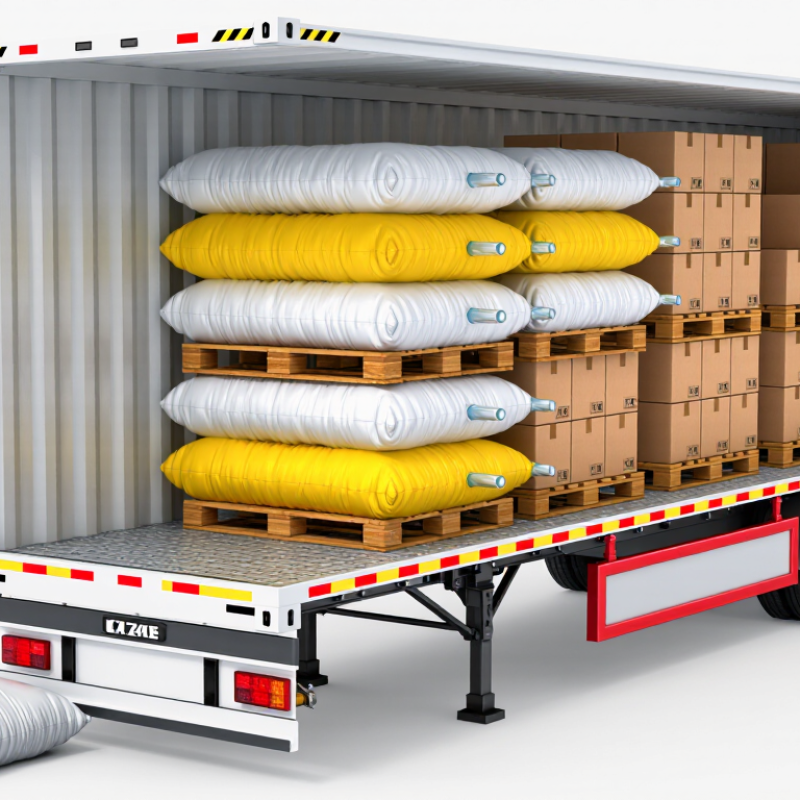
Cargo Airbags Fill Load Voids and Help Limit Freight Movement
Why Use Load Securement Airbags for Shipping?
Cargo airbags fill the empty spaces between palletized loads, helping limit movement during braking, cornering, and vibration. A small gap matters. When a trailer jolts, cartons can lean into that space, loosening a stable stack and pressing against neighboring freight. Properly sized airbags cushion the void and distribute pressure across broad surfaces. They are not a replacement for sound packaging, load planning, or other required restraints.
The IMO/ILO/UNECE Code of Practice for Packing of Cargo Transport Units (CTU Code, 2014) gives road-transport acceleration values of 0.8 g forward and 0.5 g sideways or backward. These figures show why cargo needs restraint in more than one direction.
In practice, crews should measure the void, check the strength and shape of the adjacent loads, and inflate the bag to its specified working pressure. A bag placed against a weak carton can cause damage rather than prevent it. Damp packaging, sharp edges, and uneven gaps also deserve attention. The small details matter. Air pressure alone cannot correct a poorly arranged load. Use airbags as part of a considered securement plan, and inspect the load after placement.
There is an imperfect part: crews may estimate gaps by eye, especially during rushed loading. A quick measurement can prevent that guess from becoming a costly shift in transit.
Choose Dunnage Bags by Void Width, Cargo Type, and Manufacturer Rating
Load securement airbags help limit cargo movement when a trailer or container has open space between loads. Choosing the right bag starts with the void, not guesswork. Measure its width at several points, since cartons can shift and pallet edges may leave uneven gaps. Small gaps matter. A bag that is too large may not fit properly, while one that is too small may not provide suitable support.
Cargo type affects the choice. Smooth, sturdy cartons differ from irregular lumber or tightly packed drums. Consider the load’s shape, surface, weight, and how it is arranged. Then check the manufacturer’s rating, intended application, and inflation instructions. A maximum rating alone does not confirm that a bag suits every cargo arrangement. Use the stated working pressure and follow the guidance for placing the bag against the load.
It is tempting to choose one size for every shipment. That can save time, but it may leave a bag poorly supported or cargo insufficiently braced. Recheck the gap after loading, especially when the floor or packaging is uneven. If the measurements fall between sizes, pause and verify the fit with the supplier’s technical guidance rather than forcing the bag into place.
Inflate Each Bag Within Its Specified Pressure and Temperature Limits
Load-securement airbags work only when they match the shipment’s void and the bag’s rated limits. Check the label or technical sheet for its maximum inflation pressure and permitted temperature range. Do not substitute a familiar pressure from another bag; construction and size can differ. Use a suitable gauge, inflate gradually, and stop at the specified limit.
A quick visual check feels reassuring. It can still mislead.
Temperature matters during transit. Air inside a bag can expand as it warms and contract as it cools, changing pressure after loading. Follow the bag maker’s instructions for checking pressure, especially after a significant temperature change or a long stop. Keep the inflation valve accessible, and inspect the bag for punctures, bulges, or contact with sharp cargo edges. If the reading is outside the permitted range, correct it only as the instructions allow.
Guessing is not a securement method.
The FMCSA cargo-securement rule sets a separate benchmark: tiedowns’ aggregate working load limit must equal at least half the cargo’s weight (49 CFR 393.106(d)). That figure applies to tiedowns, not an airbag’s inflation pressure. Airbags should complement a properly planned restraint system, not replace it. Record the pressure and surrounding temperature at loading.
Small detail, useful later. I would still recheck the instructions; memory is an unreliable gauge.
Inspect Bag Placement and Integrity Under a 49 CFR-Compliant Plan
A 49 CFR-compliant plan should specify where load securement airbags belong and how crews will inspect them. Check the bag before inflation: look for cuts, worn seams, leaking valves, or crushed corners. Then confirm it fits the void without covering sharp edges or pressing against a weak wall. Keep the inflation hose and pressure gauge accessible. Small details matter. A bag that looks sound may still be losing air, so recheck pressure after inflation and before the vehicle moves.
FMCSA’s Cargo Securement Rules set measurable performance requirements:
securement systems must resist 0.8 g of forward acceleration and 0.5 g in both lateral and rearward directions (49 CFR 393.102).
The rules also require aggregate tiedown working load limits of at least half the cargo weight (49 CFR 393.106).
An airbag helps fill a gap, but should not be assumed to replace required tiedowns. Record bag condition, placement, and any pressure loss on the inspection sheet. Recheck after loading changes or a stop when safe. This can feel repetitive. Still, a quick glance is not an inspection, and a neat-looking load can hide a shifting bag.