
Across global industries, material choice often determines whether a project remains dependable after years of service. Hdpe Sheet has earned attention in water treatment, chemical processing, mining, agriculture, and engineered fabrication. Its balance of toughness, moisture resistance, and chemical stability supports demanding environments. A scratched sheet may still perform reliably when its grade, thickness, and application match properly.
In practical projects, engineers value its low water absorption and impact resistance. Fabricators also appreciate its machinability, weldability, and relatively simple handling. Large sheets can line tanks, protect conveyor surfaces, or form custom components with fewer replacement interruptions. These benefits are meaningful, but they should never replace careful design. Temperature changes can cause expansion. Strong oxidizing chemicals may require another material. Outdoor installations may also need verified UV protection.
Reliable selection begins with evidence, not attractive specifications alone. Buyers should review technical data, batch traceability, dimensional tolerances, and independent test results. Standards and certification requirements can vary between countries and industries. Experienced suppliers should explain resin grade, operating limits, joining methods, and inspection procedures clearly. That builds confidence.
Still, Hdpe Sheet is not flawless. Misjudging load conditions or welding temperatures can reduce service life. This is where professional judgment matters. Site experience, documented testing, and honest risk review often reveal details that product brochures miss. For global industrial applications, the strongest choice is not simply the cheapest sheet. It is the material that performs predictably, complies with project requirements, and remains practical to maintain.
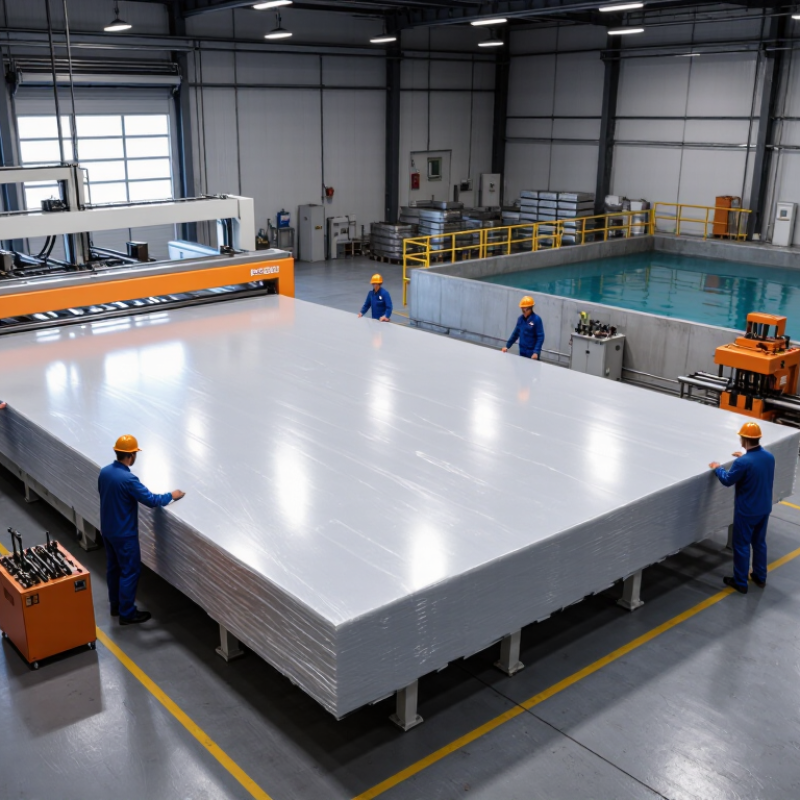
HDPE sheet is defined by a density of approximately 0.94–0.97 g/cm³. ASTM D1505 measures this value using a density-gradient technique. The result helps engineers verify material identity and production consistency. It also supports practical comparisons between sheets used for tanks, liners, wear guards, and fabricated parts. A sheet’s density is not its full story. Impact strength, stiffness, temperature resistance, surface finish, and welding behavior also influence performance.
In workshop use, a dependable HDPE sheet feels light beside metal but remains tough under repeated handling. Its low moisture absorption supports applications near water, chemicals, and outdoor equipment. However, density may shift with formulation, processing, and measurement conditions. It should never replace a complete technical datasheet. In my experience, small differences can matter when a panel must fit a machined frame or meet a strict weight limit. That detail is easy to underestimate.
Tips: Confirm ASTM D1505 results with the supplier’s test report. Check thickness tolerance, operating temperature, and chemical compatibility before cutting. Ask whether the stated density applies to the finished sheet. Test a sample when welding or heavy wear is expected. One overlooked variable can become an expensive adjustment.
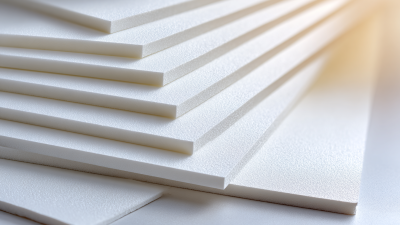
Why Choose HDPE Sheet for Global Industrial Applications?
Mechanical Performance: 20–37 MPa Tensile Strength Under ASTM D638
HDPE sheet is widely selected for industrial parts that need strength, low weight, and chemical resistance. Under ASTM D638 testing, tensile strength commonly falls between 20 and 37 MPa. This range reflects differences in resin grade, processing, specimen shape, and test conditions. It should not be treated as a universal design value.
In practical fabrication, this performance suits equipment guards, tank liners, wear panels, and protective barriers. A properly selected sheet can resist pulling forces during handling and service. Its smooth surface also helps reduce moisture absorption and routine cleaning effort. However, tensile strength alone cannot predict long-term performance. Continuous loads may cause creep, especially near fasteners, corners, or unsupported spans.
Designers should check operating temperature, load duration, thickness, and joint details before approving a sheet. ASTM D638 creates a controlled comparison, not a complete simulation of field conditions. Real installations can include vibration, impact, sunlight, and uneven loading. Small test differences matter. So do fabrication habits.
Machining and welding quality can change the final result. Poorly prepared joints may fail before the sheet material does. Engineers should request current test data and confirm the exact grade before production. A cautious review may seem slower, but it can prevent warped panels, loose fittings, and costly replacement work.
| Performance Dimension | Typical HDPE Sheet Data | Test Method / Reference | Industrial Relevance |
|---|---|---|---|
| Tensile Strength at Yield | 20–37 MPa | ASTM D638 | Provides load-bearing capacity for liners, guards, tanks, fabricated panels, and wear components. Actual values vary with resin grade, molecular weight, processing, and specimen direction. |
| Tensile Elongation at Break | Typically 300–1,000% | ASTM D638 | High ductility helps the sheet absorb deformation before rupture and supports forming and fabrication operations. |
| Tensile Modulus | Approximately 700–1,500 MPa | ASTM D638 or ISO 527 | Indicates stiffness under tensile loading and assists with structural design and deflection estimates. |
| Flexural Modulus | Approximately 700–1,500 MPa | ASTM D790 | Supports evaluation of bending resistance in covers, chute linings, partitions, and fabricated structures. |
| Notched Izod Impact Strength | Commonly above 50 J/m at room temperature | ASTM D256 | Good impact resistance helps reduce cracking from handling, dropped objects, vibration, and intermittent shock loads. |
| Density | 0.930–0.970 g/cm³ | ASTM D792 or ISO 1183 | Low density reduces component weight and supports easier transportation, installation, and handling. |
| Water Absorption | Typically less than 0.01% after 24 hours | ASTM D570 | Very low moisture uptake helps maintain dimensional stability and mechanical performance in wet or humid environments. |
| Service Temperature Range | Approximately −50°C to +80°C | Application-dependent engineering range | Suitable for many ambient and moderately elevated temperature applications; load, duration, and chemical exposure must be considered. |
| Chemical Resistance | Good resistance to many acids, alkalis, salts, and aqueous chemicals | Chemical compatibility must be verified for each medium | Useful for chemical handling, wastewater, mining, agricultural, and process-industry applications. |
| Coefficient of Linear Thermal Expansion | Approximately 100–200 × 10−6/°C | ASTM E831 or ISO 11359 | Expansion gaps, fastening methods, and support spacing should be included in designs exposed to temperature changes. |
| Surface Friction and Wear Behavior | Low-friction surface with good abrasion resistance | Wear performance depends on load, counterface, speed, and test method | Can reduce material buildup and sliding resistance in chutes, hoppers, conveyor components, and protective linings. |
Note: Values are typical engineering ranges for HDPE sheet and are not guaranteed specifications. Final selection should be based on the exact grade, sheet thickness, fabrication method, operating temperature, chemical exposure, and design load.
Chemical and moisture resistance often decide whether a plastic sheet survives daily industrial service. HDPE sheet offers a dense, low-absorption surface for tanks, liners, barriers, and protective panels. Water stays outside. Its nonpolar structure helps resist many acids, alkalis, salts, and cleaning solutions used in processing areas. However, resistance depends on concentration, temperature, exposure time, and mechanical stress.
ASTM D543 ASTM D543 provides a practical method for evaluating plastics against selected chemical reagents. Technicians may record changes in weight, appearance, dimensions, hardness, or strength after exposure. These observations help compare material performance under defined conditions. They do not guarantee identical results in every facility. A sheet exposed to warm concentrated chemicals may behave differently from one exposed to a diluted solution at room temperature. Conditions matter.
In field inspections, small details can reveal larger risks. A discolored edge, softened surface, or warped panel deserves investigation before service continues. Moisture resistance also supports easier cleaning and reduces water-related swelling. Still, HDPE is not a universal answer. Engineers should review the chemical list, operating temperature, load, joining method, and expected service life. Testing a representative sample is often wiser than relying on a generic compatibility chart. Even careful specifications can miss an unusual mixture or repeated thermal cycle. That uncertainty should remain visible in the design record.
HDPE sheet suits many industrial environments because it combines low moisture absorption with strong chemical resistance. Typical grades operate at approximately −50°C to 80°C. This range is practical, but it is not universal. Grade formulation, load, exposure time, and fabrication quality can change performance.
At −50°C, the sheet may remain useful, yet impact strength and flexibility require careful review. At 80°C, continuous pressure can cause creep, especially around bolts, supports, and tank walls.
In field applications, engineers often use HDPE sheet for liners, wear surfaces, fabrication panels, and secondary containment. A sheet facing cold wash water may perform differently from one exposed to hot chemicals. Temperature cycling also matters.
Repeated heating and cooling can loosen fasteners or create movement at joints. Real service conditions deserve testing. A datasheet alone may not reveal every installation risk. That is where practical experience helps, although experience can still be wrong when conditions change.
Tips: Confirm the grade, thickness, chemical exposure, and expected load before selection. Check operating temperature, not just short-term peak temperature. Leave room for thermal expansion during cutting and installation. Inspect edges and fasteners after early service. Small details matter.
HDPE sheet is widely used in global industrial applications because it resists moisture, corrosion, and many chemicals. Its smooth surface also supports easier cleaning in demanding work areas. In water systems, contractors use HDPE components for channels, reservoirs, pump chambers, and protective barriers. Proper thickness and welding quality remain critical. Small installation errors can create expensive leaks.
For storage tanks, HDPE sheet offers a practical balance between strength and manageable weight. Fabricators can weld panels into custom shapes, including rectangular tanks and process containers. Liner systems use the sheet to protect concrete floors, metal vessels, and containment areas from water or chemical contact. However, HDPE is not suitable for every substance or temperature. Compatibility checks should come before cutting.
Packaging applications benefit from its low moisture absorption and impact resistance. Sheets can support reusable containers, pallets, and protective packaging structures. Food-related uses require verified material grades and documented production controls. Water pipes and storage tanks also need inspection records, especially where clean water is involved. Fabrication teams commonly cut, bend, drill, and heat-weld HDPE sheet for industrial equipment. Good results depend on clean surfaces, stable temperatures, and trained operators. In practice, rushed welding still happens. It can weaken an otherwise reliable structure. Reviewing seam samples and measuring finished panels provides a more dependable quality check. Local climate, loading conditions, and maintenance access should guide the final design.
Representative HDPE sheet thicknesses commonly specified across water systems, tanks, liners, packaging, and fabrication. Actual specifications vary by load, chemical exposure, temperature, and regulatory requirements.
HDPE is widely selected because it combines low moisture absorption, strong chemical resistance, impact toughness, weldability, and a high strength-to-weight ratio. Thinner sheets are commonly used for packaging and liners, while thicker sheets support tanks and fabricated industrial components.