What is the Best Support Bar for Your Needs?
When selecting the best support bar for your needs, understanding its importance is crucial. Support bars play a vital role in enhancing safety and mobility. According to a report by the National Institute on Aging, nearly 70% of older adults experience mobility challenges. A reliable support bar can significantly reduce the risk of falls.
Different environments require different support bar types. In bathrooms, for example, grab bars provide stability and independence. Industry experts recommend a weight capacity of at least 250 pounds for optimal safety. A well-placed support bar can change lives, aiding not only the elderly but anyone recovering from surgery or injury.
Consumer preferences vary, though. Some prioritize aesthetics, while others focus solely on functionality. It’s essential to balance both aspects. Regular evaluations of available options ensure that you choose a support bar that genuinely meets your needs. Reflecting on your own requirements and environment can lead to a more informed decision. Investing time into selecting the right support bar is crucial.
Understanding the Different Types of Support Bars Available
Support bars are vital for individuals seeking stability and mobility assistance. Various types cater to different needs, ensuring safety and comfort. Understanding these types is essential for making an informed choice.
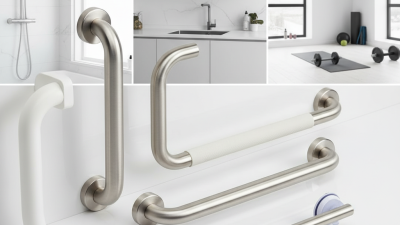
Grab bars, commonly used in bathrooms, provide support when getting in and out of the shower or bathtub. According to the National Center for Injury Prevention and Control, falls are a leading cause of injury among older adults. Installing grab bars can significantly reduce this risk, improving safety at home.
Another option is transfer rails. These assist users in moving from one surface to another, such as from a wheelchair to a chair. A study from the Journal of Rehabilitation Research and Development suggests that proper use of transfer aids reduces strain on caregivers. It emphasizes the importance of selecting the right type based on user capability and environment.
Tip: Ensure support bars are installed securely. Regularly check for wear and tear. Consider the weight limit, as it varies by type. Select bars with a comfortable grip to enhance usability.
What is the Best Support Bar for Your Needs? - Understanding the Different Types of Support Bars Available
| Type of Support Bar |
Material |
Weight Capacity |
Adjustability |
Common Use Cases |
| Wall-Mounted Support Bar |
Metal |
300 lbs |
Fixed |
Bathroom, Shower |
| Portable Support Bar |
Aluminum |
250 lbs |
Adjustable |
Travel, Outdoor Use |
| Freestanding Support Bar |
Steel |
400 lbs |
Non-Adjustable |
Home Gym, Rehabilitation |
| Grab Bar with Suction Cups |
Plastic |
150 lbs |
Non-Adjustable |
Temporary Use, Shower |
| Reinforced Support Bar |
Composite |
350 lbs |
Adjustable |
Bathroom, Hospital |
Factors to Consider When Choosing a Support Bar
Choosing the right support bar can significantly enhance safety and convenience. Consider the purpose of the bar. Will it primarily assist in movement or provide stability? Knowing your needs helps narrow options.
Materials play a vital role in selection. Stainless steel offers durability, while aluminum is lightweight. Each material has unique advantages. Think about where you will use the support bar. Indoor settings may allow for a different design compared to outdoor usage.
**Tips:** Examine weight limits. Ensure the bar can support more than the user's weight for added safety. Additionally, check the installation process. Some require professional help, while others are more user-friendly.
Lastly, evaluate the bar's grip and width. A comfortable grip enhances usability. Aim for a bar that suits your hand size. Reflect on potential challenges. Choosing a bar without testing it can lead to dissatisfaction. Always prioritize comfort and practicality in your decision.
Comparing the Materials Used in Support Bars
When choosing a support bar, the materials used play a crucial role in its performance. Support bars come in various materials, each providing different advantages. Metal bars, for instance, offer exceptional strength and durability. They are well-suited for heavy-duty applications, but they can be heavy and may corrode over time.
On the other hand, plastic support bars are lightweight and resistant to moisture and corrosion. However, they may lack the load-bearing capacity that metal bars provide. Composite materials can be an excellent compromise, combining strength with reduced weight, but their cost might be a concern for some users.
Reflecting on these options, it’s clear that no single material is perfect for every situation. The decision must be based on specific needs, environmental factors, and budget. Consider the conditions in which the support bar will be used. Will it face harsh weather? Will it need to support heavy weights? These questions can guide you in making the right choice.
Evaluating Weight Capacity and Strength Requirements
When choosing a support bar, evaluating weight capacity and strength is crucial. Many people overlook this, leading to potential safety risks. A support bar must withstand the user's weight plus any additional forces during use. You don't want a bar that bends or breaks under pressure.
Consider the material of the support bar. Metal bars typically offer high strength and durability. However, they can be heavier and less forgiving. Plastic or composite materials might be lighter, but often have lower weight limits. Testing the bar with weights before finalizing your choice can help ensure it meets your needs.
It's essential to match the support bar to your specific activities. For example, a bar designed for lifting may not suit someone seeking stability for a bathroom. Look for clear specifications on weight capacity. Some bars may look sturdy but fail in real-world scenarios. Identify your exact requirements and don't compromise on safety for convenience.
What is the Best Support Bar for Your Needs?
Assessing the Compatibility with Your Specific Needs and Setup
When choosing the best support bar, it's crucial to assess your specific needs and setup. Not all support bars are created equal, and compatibility matters. Consider where you plan to use the bar. For instance, a bar meant for a compact space differs significantly from one designed for larger areas. Measure your environment to ensure a perfect fit.
Your personal requirements also play a significant role. Think about what you need the support bar to achieve. Are you looking for stability during workouts? Or perhaps you want it to assist with mobility at home? Identifying these needs can help narrow down your options. A good support bar should feel secure and comfortable, enhancing your experience rather than detracting from it.
Having the right features is essential too. Adjustable height settings can accommodate different users. However, not every adjustable bar is easy to modify. You may find yourself struggling with complicated mechanisms. A straightforward design could offer a better user experience. Evaluate the construction material as well. It should provide strength without being overly heavy or cumbersome. Reflecting on these details can lead to a more satisfying choice.