Inquiry
Form loading...

China Best Anti Slip Pallet Sheets for Global Buyers

Global buyers increasingly seek a China Anti Slip Pallet Sheet that combines dependable grip, stable quality, and practical pricing. These sheets sit between pallets and cartons, reducing sliding during forklift movement, container loading, and long-distance transport. A few millimeters can matter when stacked cartons face vibration, humidity, or sudden braking.

Dr. Susan Selke, a respected packaging researcher, has said, “Packaging must protect products while respecting cost and environmental limits.” Her point remains valuable for international procurement. A low-cost sheet is not automatically a good sheet. Its friction performance, thickness, moisture resistance, fiber strength, and surface consistency require careful evaluation. Details matter.

Experienced buyers should request technical data, product samples, and batch-testing records before placing large orders. Coefficient of friction results should match the buyer’s load type and transport conditions. Warehouse trials can reveal problems that laboratory figures miss. That assumption is easy to overlook. China has many capable manufacturers, but quality varies between factories and even between production batches. Buyers should compare pallet dimensions, packaging methods, customization options, and delivery controls. Environmental claims also need evidence, including recycled content and responsible material sourcing.

This guide examines how to select China-made Anti Slip Pallet Sheet products for global supply chains. It considers performance, inspection, communication, and total cost. No sheet solves every load problem. Poor stacking, damaged cartons, or excessive moisture can still cause movement. A careful decision combines reliable materials with realistic handling practices.

China Best Anti Slip Pallet Sheets for Global Buyers

What Are Anti-Slip Pallet Sheets and How Do They Work?

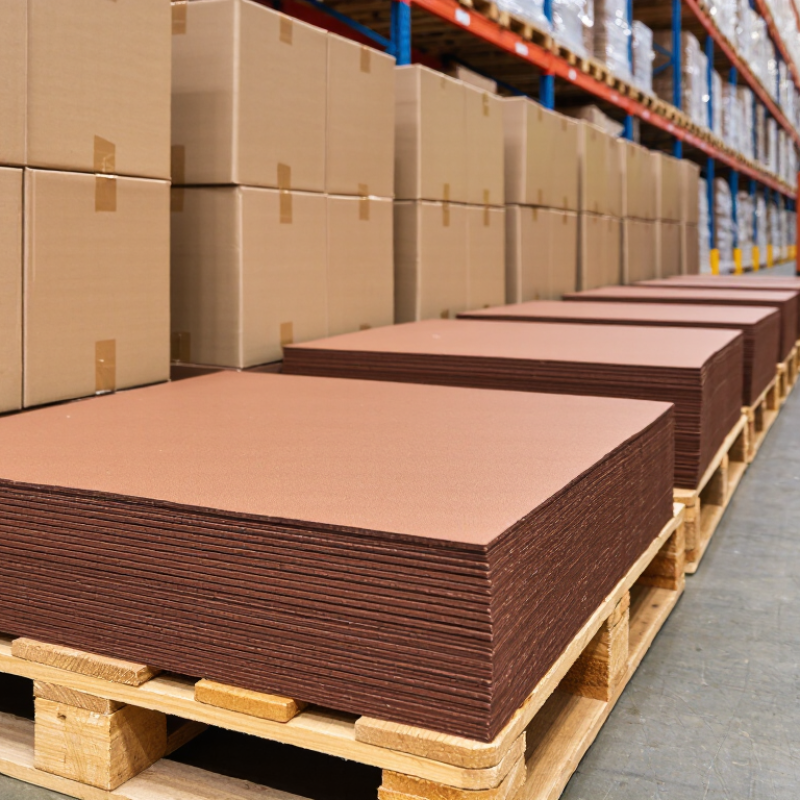
Anti-slip pallet sheets are thin layers placed between products, cartons, or pallet boards. They create extra friction and help prevent loads from sliding during transport. Unlike ordinary cardboard, many sheets use textured paper, coated board, or engineered plastic surfaces. Some versions include a mineral-like grip layer that holds packaging more firmly.

The working principle is simple. A rough surface resists horizontal movement when a truck brakes, turns, or travels over uneven roads. The sheet also spreads pressure across the load, reducing carton damage and shifting. In warehouse testing, buyers should compare friction performance under dry and humid conditions. Moisture can reduce grip, especially with low-quality paper sheets.

A practical check is useful. Place two loaded cartons on a sample sheet, then apply gradual force. Observe movement, surface wear, and residue. The sheet should remain flat and support the expected weight without tearing. It should also match pallet dimensions, since exposed edges may curl or catch equipment.

Small details matter.

For global buyers sourcing from China, reliable suppliers should provide material specifications, thickness data, load guidance, and test records. Ask whether results come from internal testing or an independent laboratory. Packaging conditions deserve attention too. Sheets stored in damp warehouses may lose performance before use. I have seen friction products fail when buyers focused only on price. The cheaper option was not always the safer choice. Performance also depends on carton surfaces, pallet quality, stacking height, and transport vibration. Therefore, trial loading remains necessary, even when technical data appears convincing.

Key Materials and Performance Features of Chinese Anti-Slip Pallet Sheets

Chinese anti-slip pallet sheets are commonly made from strong kraft paper, recycled fiber, or layered paperboard. Their surfaces may include water-based friction coatings, mineral particles, or rubber-like compounds. These materials increase grip between pallets, cartons, and other load units. The paper structure also needs enough stiffness to resist tearing during placement and removal.

Material selection affects real warehouse performance. A thick kraft base can support heavy cartons, while a textured coating helps reduce sliding during transport. However, more coating does not always mean better results. Excessive coating may increase cost, dust, or handling difficulty. Moisture resistance matters too. A sheet that performs well in dry testing may lose grip inside a humid container.

Reliable buyers should request test data for friction, compression, moisture exposure, and temperature changes. Inclined-plane tests can show whether cartons move under pressure. Static and dynamic friction results are both useful. Edge strength deserves attention because damaged corners can weaken pallet stability. Practical trials with the buyer’s actual cartons are even better.

Small details matter. A smooth carton surface behaves differently from a rough woven bag. Load weight, pallet quality, and stacking height also change performance. In my experience, laboratory figures should guide decisions, not replace warehouse testing. Some applications may need stronger sheets, while others need cleaner removal and lower weight. This balance requires careful review.

How to Choose the Right Pallet Sheet for Global Shipping Needs

Choosing the right pallet sheet for global shipping starts with the cargo, not the product label. A heavy machine part needs stronger support than boxed garments. Check the load weight, pallet material, carton surface, and stacking height. Anti-slip performance should be supported by test data, not a vague supplier claim. Ask for friction results under dry and humid conditions.

Measure the pallet carefully. A sheet that is too small may leave unstable edges, while excessive overhang can create wrinkles. Select suitable thickness and stiffness for forklift handling, container stacking, and warehouse movement. Moisture also matters. Sea freight may expose packaging to condensation, temperature changes, and long storage periods. Choose moisture-resistant material when the route demands it. Short routes need less protection.

Request samples before placing a large order. Test them with your actual cartons and pallet type. Watch for sliding during sudden stops and corner crushing during stacking. A thicker sheet is not automatically safer. It may reduce usable height and raise shipping costs. I have seen buyers focus on friction while overlooking sheet warping. That mistake is easy to repeat.

Reliable suppliers should provide clear specifications, production traceability, and consistent batch quality. Confirm dimensions, tolerance, packing method, and storage guidance in writing. Independent testing can strengthen purchasing decisions, especially when cargo crosses several climates. Cost matters, but replacement claims and delayed unloading can cost more. Recheck the choice after the first shipment. Real transport conditions often reveal details that laboratory tests miss.

Quality Standards, Testing, and Export Requirements

China Best Anti Slip Pallet Sheets for Global Buyers

Quality starts with measurable friction, not attractive packaging. Buyers should request coefficient-of-friction results under dry and humid conditions. ASTM D1894 provides a recognized method for testing frictional performance. Test reports should identify surface type, load, temperature, humidity, and sampling date. A single average value is not enough. Variation matters.

UNCTAD’s Review of Maritime Transport reports that over 80% of global merchandise trade by volume moves by sea. Pallet sheets therefore face vibration, compression, moisture, and temperature changes. Distribution testing can follow ASTM D4169 procedures. Check slip resistance after conditioning, stacking, and repeated movement. Ask for batch numbers, technical data sheets, and traceable inspection records. Small details prevent large claims.

Export documentation should match the destination market. Paper or polymer sheets usually avoid wood-packaging rules, but wooden pallets may require ISPM 15 compliance. Confirm labeling, chemical declarations, recycling marks, and customs descriptions before shipment. A practical supplier should provide samples from production batches, not only laboratory prototypes. We have seen friction results weaken after moisture exposure. That point deserves more testing. Cost pressure can also reduce coating weight, although the sheet may still look acceptable. Reliable procurement compares performance after abuse, not just price before loading.

China Best Anti Slip Pallet Sheets for Global Buyers - Quality Standards, Testing, and Export Requirements

Quality Dimension Recommended Specification or Requirement Common Test Method or Reference Typical Acceptance Target Export Buyer Verification Practical Notes
Material Construction Paper-based anti-slip pallet sheets made from multiple layers of kraft paper or recycled fiber, bonded and coated to improve friction and moisture resistance. Supplier technical data sheet and incoming material inspection. Uniform layer bonding, no delamination, visible contamination, oil stains, or damaged edges. Review the material composition, coating description, and batch traceability records. The exact number of paper layers and coating type should be matched to load weight and transport conditions.
Sheet Dimensions Common formats include 1,000 × 1,200 mm, 1,100 × 1,100 mm, and 1,140 × 1,140 mm. Custom dimensions can be produced to match the pallet footprint. Dimensional inspection using a calibrated tape measure or digital measuring equipment. Length and width tolerance agreed in the purchase specification; a practical commercial tolerance is commonly around ±3 mm unless otherwise specified. Confirm pallet size, container loading plan, corner clearance, and stacking arrangement before production. The sheet should cover the contact area without extending excessively beyond the pallet edge.
Basis Weight Commercial grades commonly range from approximately 300 to 800 g/m², depending on the required load and stiffness. ISO 536 or an equivalent grammage test method. Measured basis weight falls within the agreed product specification and batch tolerance. Request a test report showing sample identification, test date, conditioning, and measured result. Higher basis weight does not automatically mean better performance; friction, compression, and surface condition must also be evaluated.
Thickness Typical thickness is approximately 0.5 to 1.5 mm, subject to material construction and compression requirements. ISO 534 or an equivalent thickness measurement method for paper and board. Consistent thickness across the sheet, without major wrinkles, folds, or compressed areas. Compare the supplier’s measured thickness with the approved sample and purchase order. Thickness affects pallet stability, stack height, and the number of sheets that can be loaded per carton.
Coefficient of Friction Friction performance should be evaluated between the actual sheet surface and the intended load or pallet material. ASTM D1894 or another agreed friction-testing procedure, with test direction and surfaces recorded. Use a project-specific target established through load testing; the result should remain consistent across production batches. Ask for static and kinetic friction results under representative load, temperature, and humidity conditions. There is no single universal friction value for every shipment. Packaging films, dust, moisture, and surface pressure can change performance.
Slip-Angle Performance The sheet should resist sliding during handling, vehicle movement, and container transport when used with the specified load configuration. Inclined-plane slip test or an internally validated pallet stability test. Acceptance angle should be agreed from the real shipment risk assessment rather than selected only from a catalogue value. Conduct a sample trial using the actual pallet, stretch film, carton surfaces, and planned stacking height. A laboratory friction result should not replace a full-load stability test for heavy, tall, or irregular cargo.
Compression and Load Support Sheets should maintain structural integrity under the expected pallet load and stacking pressure. Compression testing based on the buyer’s packaging protocol; relevant paperboard methods may be used where appropriate. No crushing, buckling, tearing, or permanent deformation that causes load instability at the specified load. Specify total load, contact area, dwell time, stacking height, and temperature before testing. Load capacity is application-specific and should not be stated as a universal value without test conditions.
Moisture Resistance Coated or treated sheets may be selected for routes involving humidity, condensation, or short-term exposure to moisture. ISO 287 for moisture content; Cobb water absorption testing may be used for paper and board surface evaluation. Moisture content and water absorption remain within the agreed specification after conditioning. Review the coating type, storage limits, and test results before approving ocean or tropical shipments. Moisture-resistant paper is not necessarily waterproof. Direct rain exposure and prolonged water contact should be prevented.
Tear and Edge Strength Edges should withstand insertion, withdrawal, pallet movement, and contact with cartons without excessive tearing. ISO 1974 or an equivalent tear-resistance method; visual edge inspection for every production lot. No split edges, loose fibers, sharp burrs, or tears extending into the usable load area. Include edge condition and packaging damage criteria in the quality agreement. Rounded or cleanly cut corners can reduce snagging during manual handling.
Dimensional Stability Sheets should remain flat and dimensionally stable after conditioning under the expected warehouse environment. Conditioning and testing under ISO 187 principles or another agreed environmental protocol. No significant curling, waviness, or shrinkage that prevents full contact with the pallet or cargo. Request samples conditioned at representative humidity before final approval. Paper products naturally respond to relative humidity, so warehouse storage conditions should be controlled.
Surface Cleanliness Surface should be free from loose powder, oil, grease, foreign particles, and excessive coating transfer. Visual inspection, wipe test, and friction comparison against an approved reference sample. Clean, even surface with no contamination that could reduce friction or damage the packaged goods. Define acceptable limits for dust, stains, coating marks, and foreign material. Cleanliness is especially important for food, pharmaceutical, electronics, and other sensitive cargo applications.
Pallet Compatibility Compatible with wood, plastic, and composite pallets when the contact surfaces and load conditions have been tested. Application trial using the actual pallet material, carton base, stretch film, and load weight. No visible sliding or progressive movement during handling and transport simulation. Approve the complete packaging system rather than evaluating the sheet alone. Pallet contamination, damaged deck boards, uneven surfaces, and excessive film tension can affect results.
Packaging for Export Sheets should be packed in moisture-protective outer packaging with corner and edge protection suitable for container transport. Packaging inspection and simulated handling or transport testing where required. Cartons or bundles remain dry, sealed, stackable, and free from compression damage on arrival. Confirm bundle quantity, gross weight, carton dimensions, palletization, and container loading plan. The packaging should protect the sheets without creating excessive humidity inside sealed bundles.
Wood Packaging Compliance Any solid-wood pallets, crates, or dunnage used for export should comply with the destination country’s plant-health requirements. ISPM 15 treatment and marking requirements for regulated wood packaging material. Wood packaging carries a valid, legible ISPM 15 mark where required by the importing country. Confirm whether the shipment uses solid wood, processed wood, or a no-wood packing solution. ISPM 15 generally applies to solid wood packaging material, not to paper pallet sheets themselves.
Shipping Documents Commercial invoice, packing list, transport document, purchase order, and any required certificate or declaration. Document review against the destination country and agreed Incoterms® rule. Product description, quantity, net weight, gross weight, dimensions, and shipment marks are consistent across documents. Confirm HS classification with the customs broker or competent authority before shipment. HS codes and import requirements can vary by product construction and destination; avoid relying on an unverified code.
Chemical and Market Requirements For regulated markets, assess inks, adhesives, coatings, recycled content, and restricted substances according to the intended use. Applicable destination-market legislation, customer restricted-substance lists, and laboratory screening where required. Supplier declarations and test evidence meet the buyer’s and destination market’s applicable requirements. Request declarations for recycled content, restricted substances, and food-contact suitability only when relevant. Food-contact or pharmaceutical use requires separate suitability assessment and should not be assumed from general packaging compliance.
Sampling and Batch Control Each production batch should have a traceable lot number and retained reference sample. Buyer-approved sampling plan, such as an agreed AQL inspection procedure. Critical defects are absent; major and minor defect limits follow the signed quality agreement. Use pre-shipment inspection for dimensions, quantity, packaging, appearance, and document accuracy. The sampling plan should be agreed before production so inspection decisions are consistent.
Storage and Shelf Life Store flat in a clean, dry, ventilated area, protected from direct sunlight, rain, condensation, and floor moisture. Warehouse inspection and periodic review of moisture, flatness, and surface condition. Sheets remain dry, flat, clean, and usable throughout the agreed storage period. Confirm recommended storage temperature, relative humidity range, stacking height, and first-in-first-out controls. Actual storage life depends on paper construction, coating, packaging integrity, and environmental exposure.

Buyer note: Performance values should be finalized through a written specification and verified with samples under the actual pallet, cargo, warehouse, and transport conditions. Standards and import requirements should be checked against the current rules of the destination market before shipment.

How to Evaluate Chinese Suppliers, Pricing, and Customization Options

For global buyers, supplier evaluation should begin with measurable performance, not attractive catalog photos. The UNCTAD Review of Maritime Transport 2023 states that over 80% of world trade by volume moves by sea. That makes moisture resistance and stable friction important during long container journeys. Ask Chinese manufacturers for batch test reports showing coefficient of friction, thickness tolerance, compression behavior, and humidity performance. Request samples in the exact pallet size. Test them with your own cartons, stretch film, and loading pattern.

Pricing usually depends on sheet material, dimensions, printing, and order volume. Recycled paper sheets may cost less, while coated or plastic-based sheets offer stronger moisture protection. Treat very low quotations carefully. They may exclude tooling, export packing, inland transport, or inspection fees. Compare prices on the same basis, such as EXW or FOB, and confirm the minimum order quantity. ISO 8611 provides recognized methods for pallet performance testing, although the sheet itself still needs application-specific testing. Custom options can include 800 × 1,200 mm sizing, corner profiles, perforations, antistatic treatment, and private packaging. Ask whether customization changes production lead time. A supplier may promise ten days, but approval samples can add another week. I have seen buyers overlook this detail. It becomes expensive later. Review factory equipment, incoming-material controls, corrective-action records, and independent inspection results before payment. The 2024 MHI Annual Industry Report highlights continuing supply-chain pressure, so dependable communication matters nearly as much as unit price.