Choosing the 2026 Best Safety Cargo Net for Global Buyers requires more than comparing prices or attractive product photos. A dependable Safety Cargo Net should match the cargo weight, vehicle structure, loading method, and working environment. A net used on a flatbed truck may need different webbing, hooks, and edge protection from one used inside a warehouse or transport container. Details matter.
Experienced buyers inspect more than stated breaking strength. They review working load limits, mesh dimensions, strap width, stitching quality, corrosion resistance, and traceable test records. A close look at the seams can reveal loose threads, uneven tension, or rushed production. Measure twice. Confirm every attachment point.
Reliable suppliers should provide clear technical drawings, material information, inspection procedures, and practical guidance for installation. Independent testing or recognized certification can strengthen confidence, but documents must match the exact model being purchased. Regional transport requirements and workplace standards may also differ, so buyers should verify current obligations with qualified local professionals. This article compares important options for international sourcing, including reusable nets, adjustable designs, heavy-duty webbing, and custom sizes.
The “best” choice is not always the strongest or most expensive model. It should offer suitable protection, consistent quality, manageable maintenance, and dependable delivery. Some product descriptions remain vague, and that deserves careful questioning. A supplier’s response to technical questions often reveals more than a polished catalog. By examining real specifications, inspection evidence, and field suitability, global buyers can make a safer and more informed decision in 2026.
2026 Best Safety Cargo Net for Global Buyers?
Cargo Net Basics: Purpose, Types, and Safety Standards
Cargo nets do more than cover a load. They distribute restraint across multiple contact points during braking, cornering, and vibration. A suitable net can reduce shifting, falling packages, and damage to vehicle walls. It cannot correct poor loading. The cargo must remain stable before tension is applied. Check the load shape, weight, edges, and center of gravity. Sharp corners need edge protection. Wet, dusty, or oily surfaces may reduce control. Small details matter.
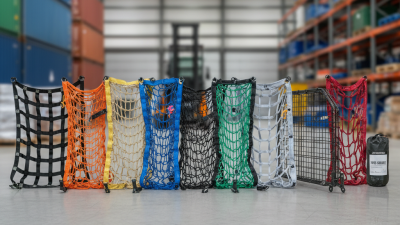
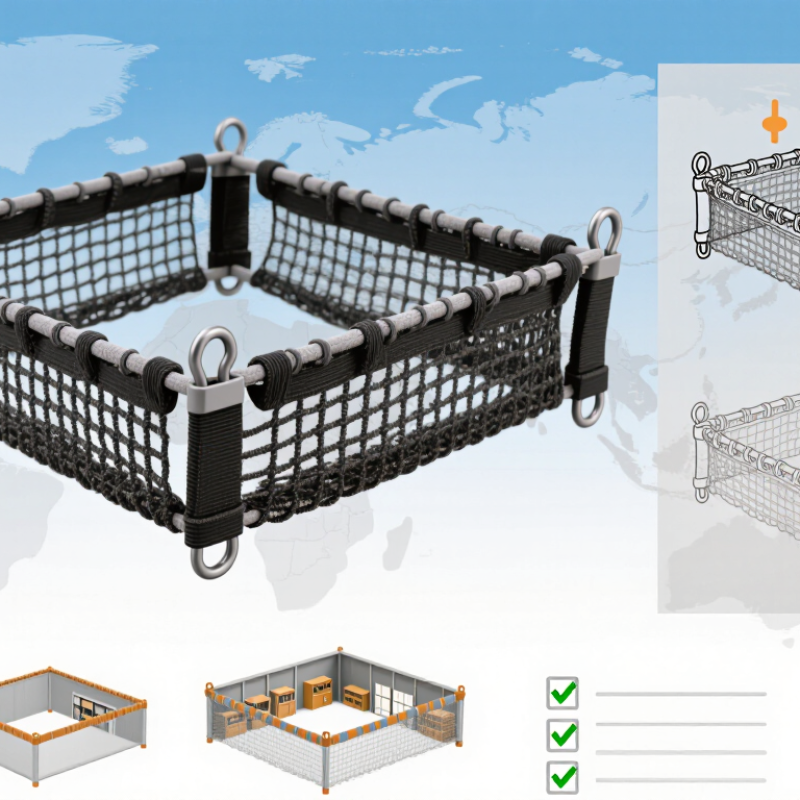
Common types include rope nets, webbing nets, and heavy-duty containment nets. Rope nets suit irregular shapes and lighter restraint tasks. Webbing nets offer broader contact and clearer load distribution. Some nets include adjustable perimeter straps, hooks, or ratchets. Choose fittings that match certified anchor points. Never confuse a cargo restraint net with a fall-protection net. They serve different risks and require different testing. That difference is easy to miss.
For global purchasing, begin with the working load limit, not marketing claims. Confirm rated load, mesh size, dimensions, material, temperature range, and abrasion resistance. Request test reports, traceable batch details, and inspection instructions. EN 12195-2 may apply to certain lashing components, while other applications require different national or sector standards. Verify the exact scope before ordering. Inspect every use for cuts, pulled stitching, damaged hooks, stretched mesh, and missing labels. Retire doubtful equipment. A label can be correct and still be unsuitable. This is where buyers often need more evidence, not more confidence.
How to Choose the Right Cargo Net for Load Size and Weight
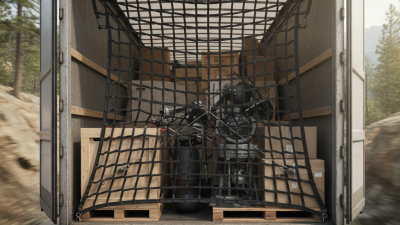
Choosing a safety cargo net starts with the load, not the vehicle. Measure the cargo length, width, height, and irregular projections. A net should cover the load without excessive gaps or sharp tension angles. Mesh openings must be smaller than the smallest unsecured item. Otherwise, boxes, pipes, or tools may slide through during braking. The net’s working load limit must exceed the calculated restraint demand, not merely the cargo’s total weight. In the United States, FMCSA regulation 49 CFR 393.106 requires cargo securement systems to provide a combined working load limit of at least 50% of the cargo weight. Treat this as a baseline, not a design shortcut.
For example, a 1,000-kilogram pallet needs more than a strong-looking net. Check rated capacity, attachment points, edge protection, and the expected braking forces. EN 12195-1 offers calculation methods for restraint forces, while EN 12195-2 addresses web lashings used in securing systems. These references help buyers compare certificates, test methods, and safety factors. The U.S. Bureau of Labor Statistics recorded 1,495 fatal occupational injuries in transportation and material-moving occupations in 2023. Cargo movement is not a minor risk.
Leave room for inspection. Look for cuts, melted fibers, loose stitching, damaged hooks, and chemical staining before every use. Weather exposure matters too. UV damage can weaken synthetic fibers while the surface still appears acceptable. I have seen buyers focus on breaking strength and overlook the attachment points. That is an expensive mistake. A net can be correctly rated yet fail because the load shape, anchor spacing, or tension method was poorly matched.
| Load Profile | Typical Cargo Examples | Suggested Net Clear Size | Recommended Mesh Opening | Indicative Cargo Weight | Minimum Planning WLL Target | Suitable Net Construction | Key Selection Considerations |
|---|---|---|---|---|---|---|---|
| Small and lightweight loads | Cardboard cartons, plastic totes, empty containers and light parcels | 2.0 × 3.0 m to 3.0 × 4.0 m | 25–45 mm | Up to 250 kg | 500 daN or higher | Polyester webbing or braided synthetic rope with reinforced perimeter | Use a small mesh to prevent packages from shifting through the net. Check that the net covers the full load surface with sufficient edge overlap. |
| General palletized cargo | Bagged products, boxed goods, drums and standard pallets | 2.5 × 4.0 m to 3.5 × 5.0 m | 45–75 mm | 250–500 kg | 1,000 daN or higher | Heavy-duty polyester webbing net with adjustable perimeter straps | Choose adjustable edge tensioning so the net can be tightened evenly without damaging cartons or bags. |
| Medium construction materials | Timber bundles, pipes, insulation packs, bricks and building supplies | 3.0 × 5.0 m to 4.0 × 6.0 m | 50–100 mm | 500–1,000 kg | 2,000 daN or higher | High-tenacity polyester webbing with reinforced corners and abrasion-resistant edge protection | Confirm that the mesh opening is smaller than the smallest loose item. Protect the net from sharp edges and rough surfaces. |
| Large and dense loads | Machinery parts, metal components, bundled profiles and large crates | 3.5 × 5.0 m to 4.5 × 7.0 m | 75–120 mm | 1,000–2,000 kg | 3,000 daN or higher | Multi-point webbing cargo net with heavy-duty hooks, rings or chain-compatible attachment points | The complete securing system must be assessed, including anchor points, hooks, straps, edge protectors and the vehicle deck. |
| Heavy industrial cargo | Steel sections, industrial equipment, stone products and heavy spare parts | 4.0 × 6.0 m to 5.0 × 8.0 m | 100–150 mm | 2,000–4,000 kg | 5,000 daN or higher | Reinforced webbing net or rope net with high-strength perimeter line and multiple load-sharing points | Use a documented lashing plan. Avoid relying on the net alone when the cargo can roll, slide or create concentrated impact loads. |
| Oversized or irregular loads | Earthmoving attachments, large machinery, irregular crates and mixed project cargo | 5.0 × 8.0 m or custom-made dimensions | 100–200 mm, selected according to the smallest item | 4,000–8,000 kg | 8,000 daN or higher | Custom-engineered net with reinforced perimeter, adjustable sections and certified attachment hardware | Measure the actual load profile, including height and protrusions. A custom net may be necessary to maintain even tension and avoid point loading. |
| Loose bulk materials | Wood chips, scrap pieces, aggregate, agricultural products and recycling materials | Based on the vehicle body; commonly 3.0 × 6.0 m to 4.0 × 8.0 m | 20–60 mm | Load-dependent; verify vehicle payload limits | 1,000–3,000 daN or higher | Fine-mesh polyester or polyethylene net with a reinforced perimeter and frequent anchor points | The mesh must retain the smallest loose particles likely to escape. Check compatibility with moisture, ultraviolet exposure and abrasion. |
| Open-top vehicle coverage | Trailer, flatbed, skip, dump body and container loads requiring top coverage | Vehicle body size plus adequate side and end coverage | Selected according to cargo particle size and risk of wind loss | Determined by the cargo and vehicle payload rating | Verify the net label and the complete securing arrangement | Weather-resistant net with elastic or adjustable perimeter system | Coverage and wind resistance are critical. The net should remain tensioned during transport and must not interfere with doors, covers or vehicle equipment. |
Material, Mesh Design, and Weather Resistance Explained
Choosing a safety cargo net starts with the material, not the price. High-tenacity polyester offers good abrasion resistance and limited stretch. Nylon absorbs more shock, but it can stretch noticeably under heavy loading. Polypropylene is lightweight and resists moisture, although sunlight may weaken it faster. Check the working load limit, not only the breaking strength. These figures are not interchangeable. A qualified supplier should provide test records, production details, and clear inspection guidance.
Mesh design affects containment and handling. Smaller openings help retain cartons, tools, and uneven loads. Larger openings reduce weight and may suit bulky equipment. Square mesh gives predictable coverage, while diamond mesh can conform better around irregular cargo. Look closely at knot security, border rope, stitching, and attachment points. A strong center with weak edges is still a failure risk. I have seen buyers focus on rope thickness and overlook damaged corner loops.
Weather resistance deserves practical testing. UV exposure, rain, salt air, freezing temperatures, and repeated drying can age fibers differently. For outdoor use, request evidence of UV stabilization and resistance testing. Inspect for fading, stiffness, broken yarns, and loose seams after harsh exposure. No net remains safe forever. That is an uncomfortable point, but replacement intervals should reflect actual use, storage, and loading habits. When specifications seem vague, pause before purchase. Some “universal” designs are not universal at all.
For global cargo-net buyers, compliance begins with the destination market. ISO 27956 addresses cargo securing in delivery vans, while EN 12195-1 and EN 12195-2 support load calculations and web-lashing requirements. EN 1263-1 concerns fall-protection safety nets, not every cargo net. Confusing these standards creates real purchasing risk.
The World Health Organization reported about 1.19 million road deaths annually in its Global Status Report on Road Safety 2023. A loose pallet, torn seam, or failed hook can become a roadside hazard within seconds. Buyers should request independent test reports from laboratories accredited to ISO/IEC 17025. Reports should identify tensile strength, seam performance, abrasion resistance, hook loading, elongation, and environmental conditioning. The declared working load limit must match the tested configuration, including anchor spacing and net dimensions.
Reliable documentation matters as much as strong webbing. Each batch should carry traceable identification, material details, production date, rated capacity, inspection guidance, and clear installation instructions. European shipments may require evidence aligned with EN practices, while United States shipments must also consider applicable cargo-securement rules under 49 CFR Part 393. Requirements vary by vehicle and route. That part is often underestimated. A certificate alone does not prove safe field performance; damaged edges, uneven tension, wet cargo, and poor anchorage can change the result. Buyers should inspect samples under realistic loading conditions, record defects, and reconsider specifications when actual use differs from laboratory testing.
The chart highlights publication years of major compliance references that may apply to safety nets, cargo restraint nets, and flexible load-containment products. Buyers should confirm the applicable edition, product scope, load rating, material traceability, inspection records, and independent test evidence for the destination market.
References shown: AS/NZS 4380:2001 for cargo restraint systems, ISO 21898:2004 for flexible intermediate bulk containers, and EN 1263-1:2014 for safety nets. These standards are not interchangeable; the correct compliance route depends on whether the net is used for cargo restraint, fall protection, lifting, or containment.
For global buyers, a safety cargo net should be judged by tested performance, not appearance. The International Labour Organization reported 2.93 million work-related deaths annually in its 2024 safety estimates. Secure load containment remains a practical priority. Ask suppliers for mesh size, breaking strength, edge-rope strength, abrasion results, and inspection records. EN 1263-1 is useful for fall-protection nets, but cargo restraint applications may require different specifications. Do not assume one certificate covers every use.
Supplier pricing often changes with polymer type, dimensions, stitching, hardware, and order volume. Recent industrial-textile market reports show continued demand for high-strength synthetic fabrics, especially in logistics and construction. In practical quotations, a small custom net may cost under 100 USD, while reinforced, large-format nets can exceed 1,000 USD. Freight, sampling, and load testing may add unexpected costs. Cheaper is not always efficient. Sometimes it is simply incomplete.
Tips: Request a sample first. Measure the rope diameter yourself. Check sewn joints for skipped stitches and uneven tension. Ask for a batch traceability code and written test method. Compare working load limit with breaking load; they are not the same. Photograph the net before deployment. A supplier may provide excellent documents yet poor consistency between batches. I have seen this gap overlooked during urgent purchasing. Build inspection time into the schedule, even when the project feels routine.