Freight moves through warehouses, trailers, railcars, and containers, where hard braking, vibration, and uneven floors can shift a load. The U.S. Department of Transportation’s Freight Facts and Figures 2024 documents the scale and multimodal nature of freight movement. That context matters: securement products must perform across real handling conditions, not just look sturdy on a warehouse shelf.
Load Securement Airbags fill spaces between cargo and help limit movement during transit. The IMO/ILO/UNECE Code of Practice for Packing of Cargo Transport Units (CTU Code, 2014) provides practical guidance on cargo distribution and restraint, including methods for preventing movement inside transport units. It does not endorse a particular airbag brand. That distinction matters. Product choice still depends on the load, the gap size, the packaging, and the equipment used to inflate the bag.
This guide compares ten options through practical criteria: construction, valve design, inflation control, size range, handling, and supplier support. A palletized load may need a different bag from a dense industrial shipment. A small gap can be deceptive. We also consider published product specifications and technical guidance, rather than treating marketing claims as proof of performance. Some comparisons remain imperfect because manufacturers do not always report test results in the same way. That limitation deserves attention. The goal is a useful shortlist, not a universal winner: the right airbag is the one that fits the load and can be applied consistently by trained staff.

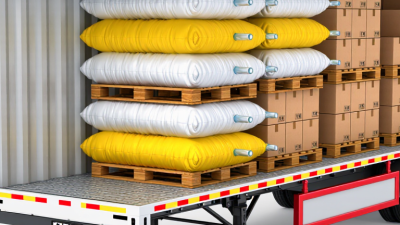
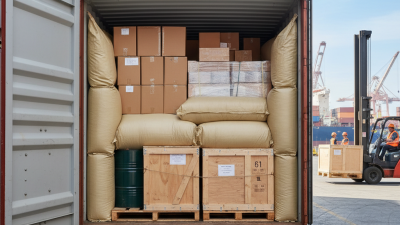
Load-securement airbags, also called dunnage bags, are inflatable cushions placed in voids between freight units or between cargo and a container wall. Once inflated, they press against adjacent surfaces to limit movement during braking, cornering, vibration, and handling. Think of a pallet that shifts a few centimeters on a rough road: a correctly sized bag helps fill that gap and spread pressure across the load. It is a stabilizer, not a replacement for sound packaging or other required restraints. Small gaps matter.
The U.S. Federal Motor Carrier Safety Administration’s cargo-securement standard, 49 CFR §393.102, specifies performance thresholds of 0.8 g forward and 0.5 g sideways and rearward. These figures help explain why a bag’s placement, inflation, and pressure rating matter. They do not mean that any airbag automatically makes a shipment secure. Bag selection should account for the gap, cargo weight, packaging strength, and transport conditions. A crushed carton can still fail under pressure; that detail is easy to miss.
Tips: Measure the void before loading, protect sharp edges, and inflate only to the supplier’s stated pressure. Check for leaks and shifting before dispatch. If the gap is uneven, reassess the packing plan rather than forcing one bag to do everything.

What Are the Top 10 Load Securement Airbags?
Compare 10 Airbag Options by Material, Pressure, Size, and Intended Load
Airbags should match the gap, load, and transport conditions—not just the available pressure. These ten common configurations offer a practical starting point. A 24 × 36-inch, 2-psi paper-poly bag suits small gaps beside light cartons. A 36 × 48-inch, 2-psi woven-polypropylene bag fits short pallet voids. A 36 × 72-inch, 4-psi paper-poly bag handles mixed cartons. A 48 × 72-inch, 4-psi woven bag suits denser, boxed freight. A 48 × 96-inch, 4-psi woven bag spans longer pallet gaps. A 48 × 72-inch, 6-psi multiwall-paper option fits medium-heavy loads when its rating permits. A 48 × 96-inch, 6-psi reinforced-poly bag is intended for larger voids and heavier freight. A 36 × 72-inch recycled-paper laminate bag offers a lower-pressure choice for moderate gaps. A moisture-resistant, coated-woven 48 × 96-inch bag can suit humid handling conditions. A high-pressure, reinforced 48 × 96-inch option may suit demanding applications, but only within its tested rating.
Pressure is not a cargo-capacity rating. The IMO/ILO/UNECE CTU Code (2014) treats void filling as one element of a complete cargo-securing plan. For road transport calculations, EN 12195-1 uses design accelerations of 0.8g forward and 0.5g sideways. Actual selection depends on gap width, load edges, friction, and handling. A mismatch can leave cartons shifting—or crush packaging. That detail is easy to overlook.
Tips: Measure the void at several points, check the bag’s rated working pressure, and use a regulator. Never assume a larger bag is automatically safer; test the loading pattern and inspect for leaks before dispatch.
A practical comparison of representative bag sizes, materials and typical applications. Lengths are shown in inches; these are common size examples, not a universal standard.
| Option | Representative size (L × W) | Common material | Pressure guidance | Typical application |
|---|---|---|---|---|
| 1 | 36 × 18 in | Multi-ply kraft paper with PE liner | Use the bag’s marked rating | Small voids between cartons or light pallet loads |
| 2 | 36 × 24 in | Multi-ply kraft paper with PE liner | Use the bag’s marked rating | Narrow gaps in unitized cargo |
| 3 | 48 × 24 in | Multi-ply kraft paper with PE liner | Use the bag’s marked rating | Cartons and medium pallet gaps |
| 4 | 48 × 36 in | Woven polypropylene | Use the bag’s marked rating | Larger palletized loads with broader contact areas |
| 5 | 60 × 36 in | Multi-ply kraft paper with PE liner | Use the bag’s marked rating | Medium-to-large voids between stable loads |
| 6 | 72 × 36 in | Woven polypropylene | Use the bag’s marked rating | Longer gaps in palletized or crated cargo |
| 7 | 84 × 36 in | Woven polypropylene | Use the bag’s marked rating | Extended voids between robust, well-supported loads |
| 8 | 96 × 36 in | Multi-ply kraft paper with PE liner | Use the bag’s marked rating | Long gaps in container or truck loads |
| 9 | 96 × 48 in | Woven polypropylene | Use the bag’s marked rating | Broad contact across large, stable cargo faces |
| 10 | 120 × 48 in | Woven polypropylene | Use the bag’s marked rating | Very long gaps where the bag is fully supported |
There is no single pressure rating for a given bag size: allowable inflation pressure depends on the bag’s construction and grade. Follow the bag label and inflation-equipment instructions. Choose a bag based on the gap, cargo stability, contact surfaces and transport conditions—not cargo weight alone. Dunnage airbags supplement, rather than replace, required load-securing practices.
A “top 10” load securement airbag comparison should begin with performance, not appearance. Under 49 CFR 393.102, cargo securement systems must withstand 0.8 g forward deceleration and 0.5 g lateral acceleration; the rule also specifies 0.5 g rearward. FMCSA’s Cargo Securement Rules guidance explains these performance thresholds. They are not airbag pressure ratings. A bag that fills a gap neatly may still be unsuitable if its rating, size, or placement does not match the load.
Compare airbag options by declared capacity, inflation guidance, puncture resistance, and fit between cargo surfaces. AAR’s Intermodal Loading Guide discusses load distribution and blocking as parts of a complete restraint plan. That context matters: airbags help limit shifting, but should not be treated as automatic substitutes for required tiedowns. Record the load dimensions, void width, and selected bag specification before loading. Small details matter. One point worth questioning: a clean test setup rarely captures every rough road, sharp turn, or imperfect pallet edge.
Tips: Check the bag’s label and manufacturer instructions before inflation. Measure the void at several points. Recheck pressure and cargo position after loading, and document any mismatch.
The options below are common, generic airbag configurations—not a brand ranking. Dimensions are nominal examples; available sizes and construction vary by product. An airbag is a void-filling component, not a standalone certification of cargo securement. Under 49 CFR 393.102, cargo securement systems must meet applicable performance criteria, including 0.8 g forward and 0.5 g sideways; the complete load system must be assessed.
| # | Generic airbag type | Typical construction | Common nominal size examples | Typical use | Selection considerations |
|---|---|---|---|---|---|
| 1 | Single-ply kraft paper | Paper outer ply with an inflatable inner liner | Small formats, such as about 24 × 36 in | Small, low-risk voids and lighter unitized loads | Check the product’s stated application and void limits; avoid sharp edges that can puncture the bag. |
| 2 | Multi-ply kraft paper | Multiple paper plies around an inflatable liner | About 36 × 48 in | General palletized freight with a moderate side-to-side gap | Match bag size and stated working limits to the actual gap, load, and contact surfaces. |
| 3 | Heavy multi-ply kraft paper | Heavier multi-ply paper construction with an inflatable liner | About 48 × 72 in | Larger voids between substantial, stable cargo units | A heavier construction does not establish a universal load rating; follow product instructions. |
| 4 | Woven polypropylene (PP) | Woven synthetic outer fabric with an inflatable liner | About 36 × 48 in or 48 × 72 in | Applications where resistance to scuffing is useful | Inspect for cuts, seam damage, and abrasion; verify compatibility with the cargo and trailer. |
| 5 | Coated woven-fabric bag | Woven fabric with a protective coating and inflatable liner | About 36 × 48 in to 48 × 96 in | Loads needing added surface protection in handling or transit | Coating does not make the bag puncture-proof; check the specified pressure and use conditions. |
| 6 | Long-format paper dunnage bag | Multi-ply paper construction sized for a longer contact area | About 48 × 96 in | Long gaps between rows of palletized or unitized freight | Ensure the bag is supported and positioned as directed; do not bridge an unsuitable or irregular gap. |
| 7 | Extra-long paper dunnage bag | Multi-ply paper construction in an extended length | About 48 × 120 in | Extended voids where a long bag is suitable for the cargo layout | Longer dimensions alone do not mean greater securement capacity; confirm the permitted void and loading arrangement. |
| 8 | Narrow-profile bag | Paper or woven-fabric outer construction with a slimmer profile | Size selected to suit a narrow void; check actual inflated dimensions | Constrained gaps where a wider bag will not fit correctly | Use only within the manufacturer’s stated void range; avoid folding or forcing the bag into place. |
| 9 | High-friction-surface bag | Bag with a friction-enhancing outer surface, where specified for the product | Common formats include about 36 × 48 in and 48 × 72 in | Situations where reducing cargo-to-bag sliding is a design consideration | Do not assume a friction value; use verified product data and assess the full securement system. |
| 10 | Reusable heavy-duty fabric bag | Durable fabric construction intended for reuse when the product permits | Size depends on the intended void and product specification | Repeated-use operations with inspection and handling procedures | Reuse only if permitted; inspect the liner, seams, valve, and outer fabric before each use. |
Compliance and safe-use note: 49 CFR 393.102 evaluates the performance of the cargo securement system, not an airbag category in isolation. Select bag size, construction, placement, and inflation pressure using the bag’s instructions and verified product information. Inspect the cargo, packaging, contact surfaces, and securement components, and assess the complete arrangement against applicable regulations and operating conditions.
Choosing among the top 10 load securement airbags starts with the gap, not the product label. Measure the void at its widest point and check whether cartons, pallets, or rigid crates could shift into it. Common bag dimensions range from compact 24-by-36-inch cushions to longer 48-by-96-inch options; match the inflated size to the space without forcing cargo apart. The U.S. Bureau of Transportation Statistics’ Freight Facts and Figures 2023 projects freight movement to grow about 50% between 2020 and 2050. More freight means more varied loads, but one bag size will not suit every shipment.
Inflation pressure matters just as much. Follow the bag’s rated pressure and the supplier’s guidance for the load and void; do not assume extra pressure means extra security. Rail, truck, and intermodal shipments face different vibration and handling conditions. A snug fit is the goal. A bag that bulges against weak cartons may cause damage, while an undersized bag can lose contact as cargo settles. Check the restraint system as a whole, consistent with FMCSA cargo-securement guidance, rather than relying on an airbag alone.
Tips: Measure the void after loading, then recheck clearance near doors and sharp edges. Keep the inflation gauge visible. A rushed measurement can still be wrong; inspect the fit before dispatch.
When comparing ten load-securement airbags, look beyond size and advertised strength. The right choice should fit the actual void between the cargo and trailer wall without forcing packages out of alignment. Check the product instructions for inflation pressure, placement, and compatible inflation equipment. A bag that looks correctly sized on paper may not suit a narrow, irregular gap. Measure the space.
During installation, keep the bag away from sharp edges, wet surfaces, and protrusions that could puncture it. Center it across the gap, then inflate it only to the specified pressure. Watch the cargo as pressure builds; movement or crushed packaging is a warning to stop and reassess. Small details matter. Still, a checklist cannot catch every awkward load shape, so experience and a final visual inspection remain important.
Reuse guidance should be clear, not assumed. Reuse only when the manufacturer permits it, and inspect each bag for leaks, worn seams, damaged valves, or surface cuts. Ask for test documentation showing the tested pressure, performance criteria, and conditions used. Useful records should be traceable to the product or production lot. If documents are vague, request clarification before relying on the bag. A tidy certificate is not a substitute for sound installation.